The Vision AI Label Reader automatically captures and interprets label information regardless of layout, language or code type, improving process reliability, data quality and traceability in goods-in and logistics operations.
Goods-in operations in the electronics industry are under increasing pressure. Countless components from a wide range of manufacturers arrive with constantly changing label layouts, multilingual markings and ever shorter throughput times. What could once be managed manually has now become a bottleneck. Damaged barcodes or reflective packaging further increase effort and make processes more error-prone
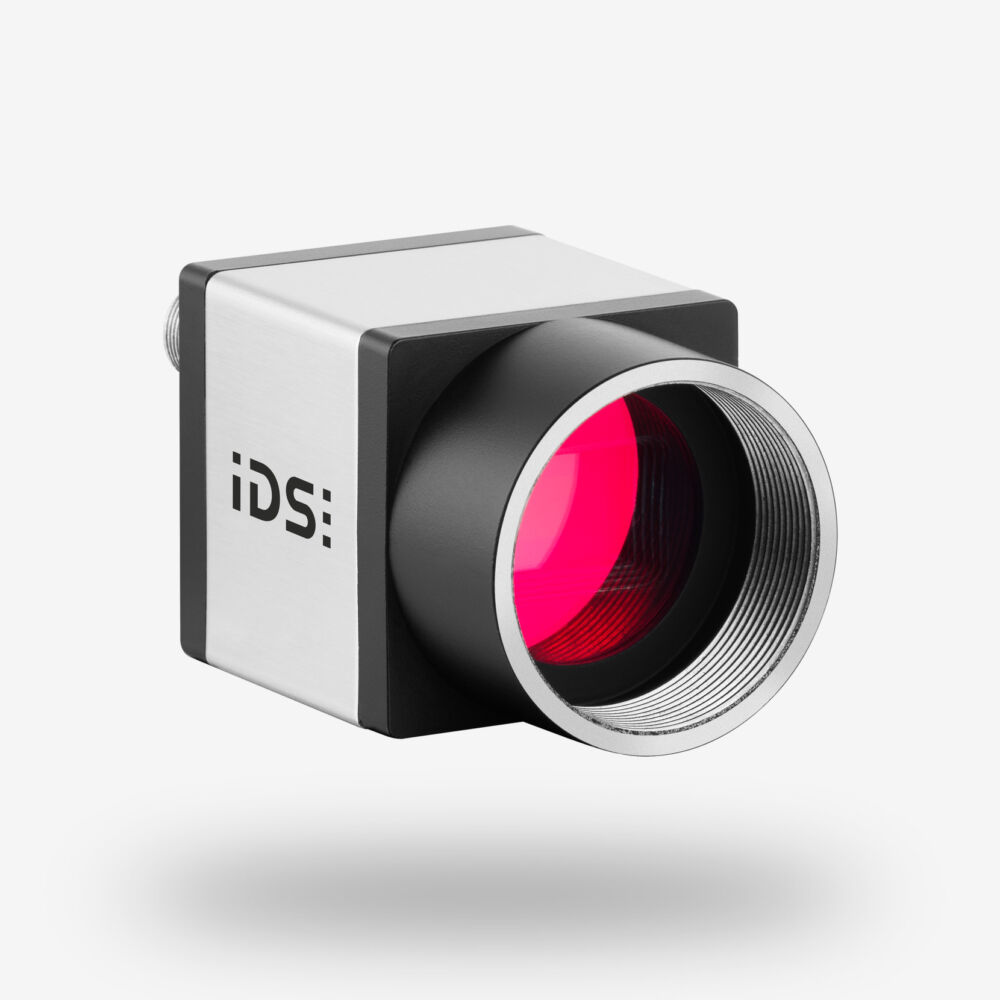
The Vision AI Label Reader from collective mind GmbH (COMI) demonstrates how this complexity can be managed. The AI-based image processing system automates the capture and interpretation of item information in goods-in and logistics – regardless of layout, language or code type. Designed for industrial use, the solution improves process reliability, enhances data quality and streamlines workflows. A uEye CP industrial camera from IDS Imaging Development Systems GmbH provides the image data required for analysis.
Fully automated capture instead of manual inspection
The Vision AI Label Reader is designed for applications where a wide variety of items, labels and packaging are processed on a daily basis. This makes it particularly suitable for electronics manufacturing service providers as well as companies with complex logistics processes and extensive inventories. One concrete example is Rutronik Elektronische Bauelemente GmbH, a globally leading broad-line distributor of electronic components, where the system is already in successful operation. The goal is to automatically capture all relevant item information and make it available in a structured format.
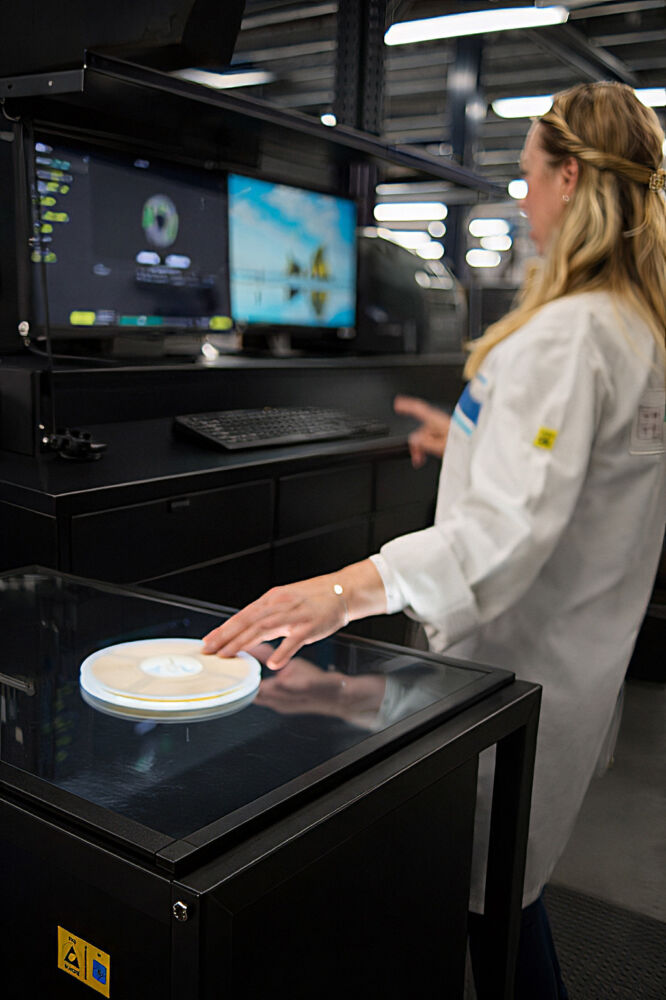
To achieve this, the system recognises all labels on an object, reads printed text as well as 1D and 2D codes, and then interprets the content using artificial intelligence. Handwritten entries can also be processed if required. Crucially, recognition does not rely on predefined label standards. New layouts, languages or code formats can be handled without retraining – a key factor for scalability and long-term viability.
Camera and AI working together
A central component of the solution is the industrial camera from the uEye CP family by IDS. It captures labels and packaging surfaces at high resolution and supplies the image data for AI analysis, reliably detecting fine details even under challenging conditions. In practice, reflective packaging such as dry packs, damaged codes or fluctuating lighting conditions place high demands on image acquisition. In combination with a coordinated lighting concept, however, the system achieves consistently stable recognition performance. The use of a standard vision interface (USB3 Vision) also simplifies connection to industrial PCs and ensures easy integration into existing systems.
The compact magnesium housing of the uEye CP (29 × 29 × 29 mm) is both lightweight and robust, weighing around 50 g. COMI uses a model equipped with the light-sensitive IMX183 rolling shutter CMOS sensor from Sony’s STARVIS series. Thanks to back-side illumination (BSI) technology, it delivers reliable image quality even in low-light conditions. “With a resolution of 20.44 megapixels and a frame rate of almost 20 frames per second, the camera provides exactly the level of detail we need to reliably capture even very small label information,” explains Tobias Husemann, Senior Consultant at COMI.
Improved data quality and end-to-end traceability
Following image acquisition, the AI analyses the data in several stages: Labels are localised, contents extracted and then semantically interpreted, for example to clearly assign part numbers, batches or manufacturer information. The results are transferred directly to connected ERP systems such as SAP or proALPHA, including real-time comparison and validation.
For users, this means a significant reduction in manual inspection steps and sources of error. At the same time, data quality improves and complete documentation of all item movements is created. The resulting 100 per cent traceability is increasingly becoming a decisive differentiator, particularly in view of stricter regulatory requirements in downstream industries such as medical technology.
Improved efficiency in goods receipt
Compared with conventional multi-label readers, practical use shows an efficiency gain of around 30 per cent in item capture. Processes can be accelerated, personnel resources deployed more effectively and bottlenecks in goods-in reduced. Automated plausibility checks of label content also increase process reliability and help identify errors at an early stage.
Outlook: From tabletop scanner to fully automated system
The market is clearly moving towards highly automated item capture. In future, the Vision AI Label Reader is set to move beyond use as a tabletop scanner and become fully integrated into automated warehouse and material flow solutions. This is already being planned in collaboration with system integrators. According to Husemann, this also increases the demands placed on camera technology: “It has to cope with changing and sometimes unfavourable lighting conditions and work reliably on reflective surfaces. At the same time, a large depth of field is required, as labels and packaging are presented at different heights and distances and still need to be captured reliably.”
In addition, the functional scope of the ‘Label Reader’ is to be expanded gradually. Alongside pure item capture, topics such as anomaly and defect detection are coming into focus – for example identifying damaged labels, adhesive residues or defective items. This transforms AI-based image processing from a capture system into a central quality and inspection tool in goods-in. After all, tidiness is half the battle…
Image Rights:
#collective mind GmbH
© 2026 IDS Imaging Development Systems GmbH