
The role of advanced microscopy in identifying critical automotive coating defects
Eindhoven, The Netherlands (May 2025) — Even in high-performing organisations, the cost of poor quality still accounts for between 10 and 15 per cent of operations, according to the American Society for Quality. In automotive manufacturing, paint and coating defects are a key contributor to these costs. Here, Dr. Alice Scarpellini, Applications Development Scientist at Thermo Fisher Scientific, discusses how AI-enhanced correlative microscopy is accelerating coating evaluation by providing fast, reliable insights at scale.
As well as serving an aesthetic purpose, automotive coatings play a crucial role in improving vehicle durability, reducing weight and enhancing corrosion resistance. In response to increasingly stringent environmental and performance standards, manufacturers are seeking advanced solutions that go beyond traditional zinc-based coatings. One such innovation is the use of multilayer aluminium-zinc-magnesium (Al-Zn-Mg) coatings, which offer better protection against corrosion and wear.
However, the complexity of these multilayer coatings increases the need for precise, high-resolution quality analysis, as even subtle variations in phase composition or interface adhesion can lead to coating failure, delamination or accelerated corrosion. As a result, quality control (QC) and failure analysis (FA) teams are tasked with delivering more detailed insights, faster and within the constraints of high-throughput production lines.
Limits of traditional microscopy
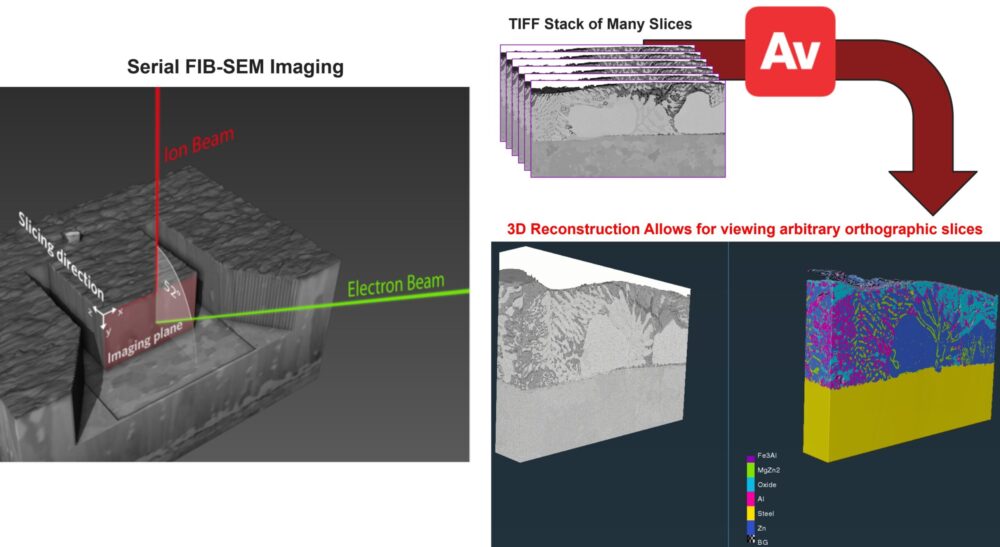
QC and FA professionals often rely on multiple characterization techniques. These include scanning electron microscopy (SEM) for surface imaging, focused ion beam (FIB) milling for cross-sectioning, energy-dispersive X-ray spectroscopy (EDS) for elemental analysis and electron backscatter diffraction (EBSD) for crystallographic information. When used together, these methods provide detailed insight into the structure and composition of coating systems.
This combined workflow can be time-consuming and highly specialised. Techniques like SEM and FIB, for instance, generate large datasets that require manual interpretation, often by experienced analysts. Preparing cross-sections of the steel-coating interface adds another level of complexity as it demands a high level of expertise to achieve the surface quality necessary for reliable analysis.
Moreover, certain features at the steel-coating interface, such as manganese oxide (MnO) inclusions and iron-aluminate (FeAl) particles, are critical from a quality assurance (QA) and FA standpoint, as they can significantly impact adhesion. . Accurately identifying these features, mapping their distribution and doing so from surfaces that support statistically meaningful conclusions is essential. Achieving this level of insight at scale, however, remains a major challenge for industrial labs.
With such high stakes and limitations in traditional methods, some QC and FA teams have instead turned to correlative microscopy combined with AI for higher throughput and improved results accuracy.
Why AI?
Incorporating AI into microscopy workflows unlocks more detailed analysis that can be completed much faster. In essence, AI-enhanced correlative microscopy integrates multiple imaging modalities with deep learning, enabling faster and more consistent evaluations across both 2D and 3D analyses.
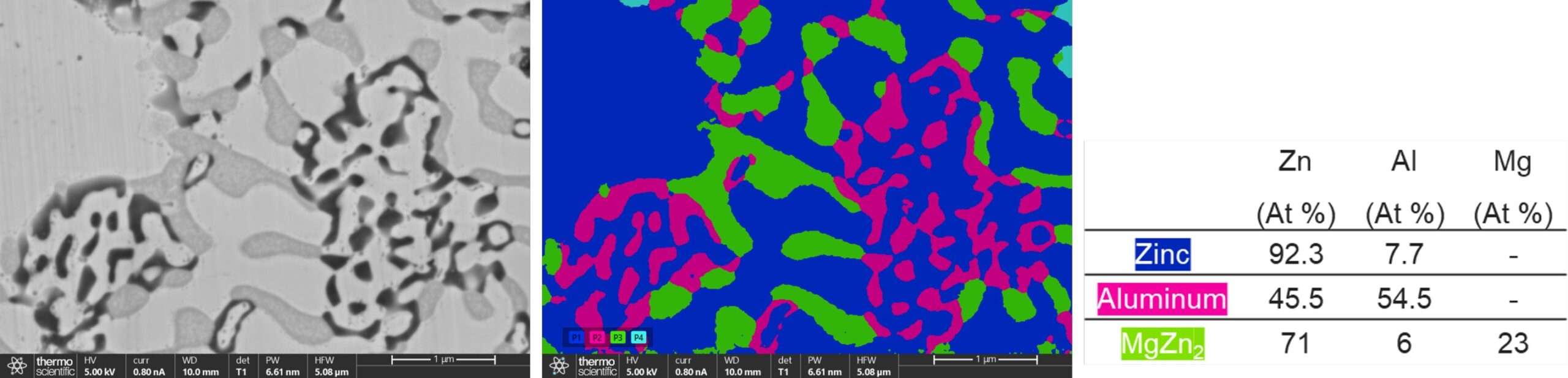
A key capability of AI-supported workflows is automated chemical phase mapping. By correlating BSE images with EDS data at each pixel, distinct phases such as Zn, Al and corrosion-resistant MgZn₂ can be identified with statistical precision, reducing reliance on manual interpretation.
Deep learning also plays a critical role in phase segmentation. Models trained on validated datasets can accurately distinguish and quantify different phases within both 2D and 3D datasets. This greatly reduces the subjectivity of manual interpretation and supports more reproducible results across users and labs.
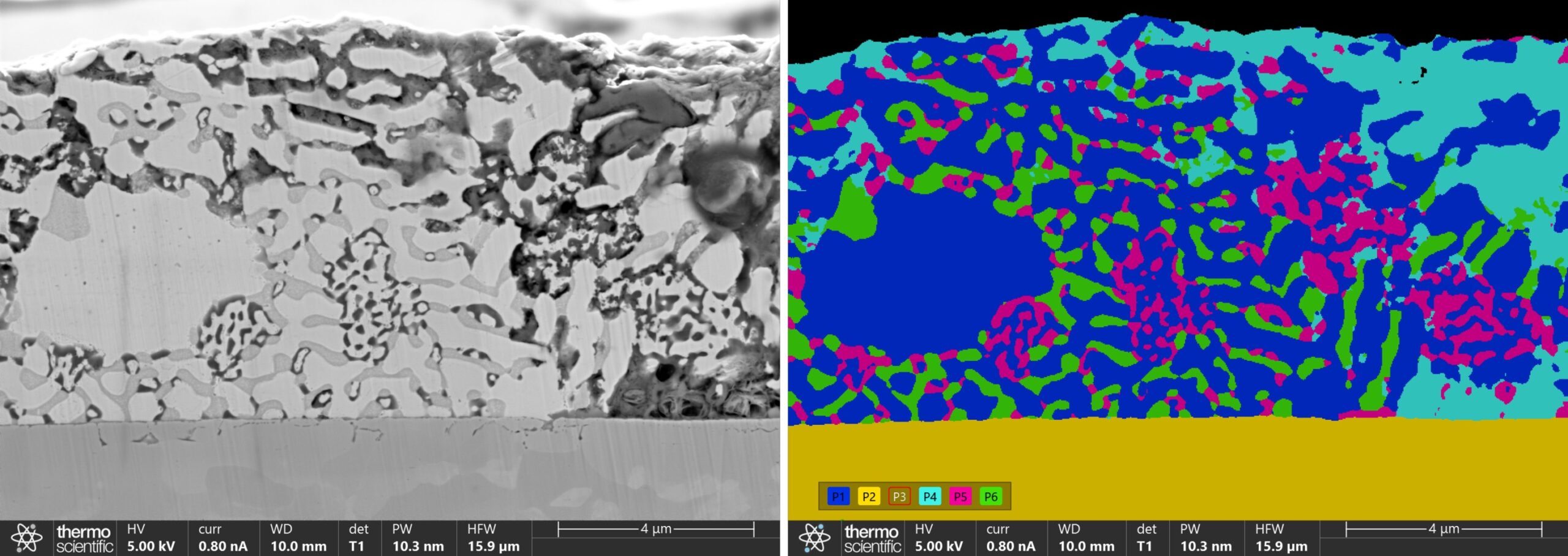
Crucially in the case of coating QC, this technology enhances interface evaluation. It allows features like FeAl intermetallics, which enhance adhesion, and MnO inclusions, which are often linked to failure, to be detected and measured with greater confidence.
By streamlining both standard SEM imaging and more complex 3D reconstructions, AI-enhanced workflows significantly reduce turnaround time, without sacrificing accuracy and consistency.
Breaking down a sample workflow
To get a better idea of how this kind of workflow operates, let’s look at an example. Thermo Fisher Scientific researchers recently validated a correlative microscopy workflow for automotive coating evaluation that combines deep learning segmentation with SEM imaging, EDS-based elemental mapping with ChemiSEM Technology, and ChemiPhase, a component of ChemiSEM Technology that offers automated phase mapping. The goal of this workflow is to provide quality engineers with faster actionable data, especially at the coating/substrate interface.
After mechanical polishing, the sample is imaged via SEM, with Apreo ChemiSEM, and elemental data is acquired and processed through ChemiSEM Technology, Thermo Scientific’s fully integrated EDS package. ChemiSEM Technology delivers fully processed and deconvolved elemental maps, alongside ChemiPhase maps, revealing not only elemental distribution but also identifying the different material phases present. The workflow provides detailed information on the distribution, composition, and proportion of these phases within the analysed area.
A deep learning model — using a VGG19-Unet architecture embedded in the Avizo 3D Pro platform — is trained on this data to perform segmentation and classification of different phases automatically.
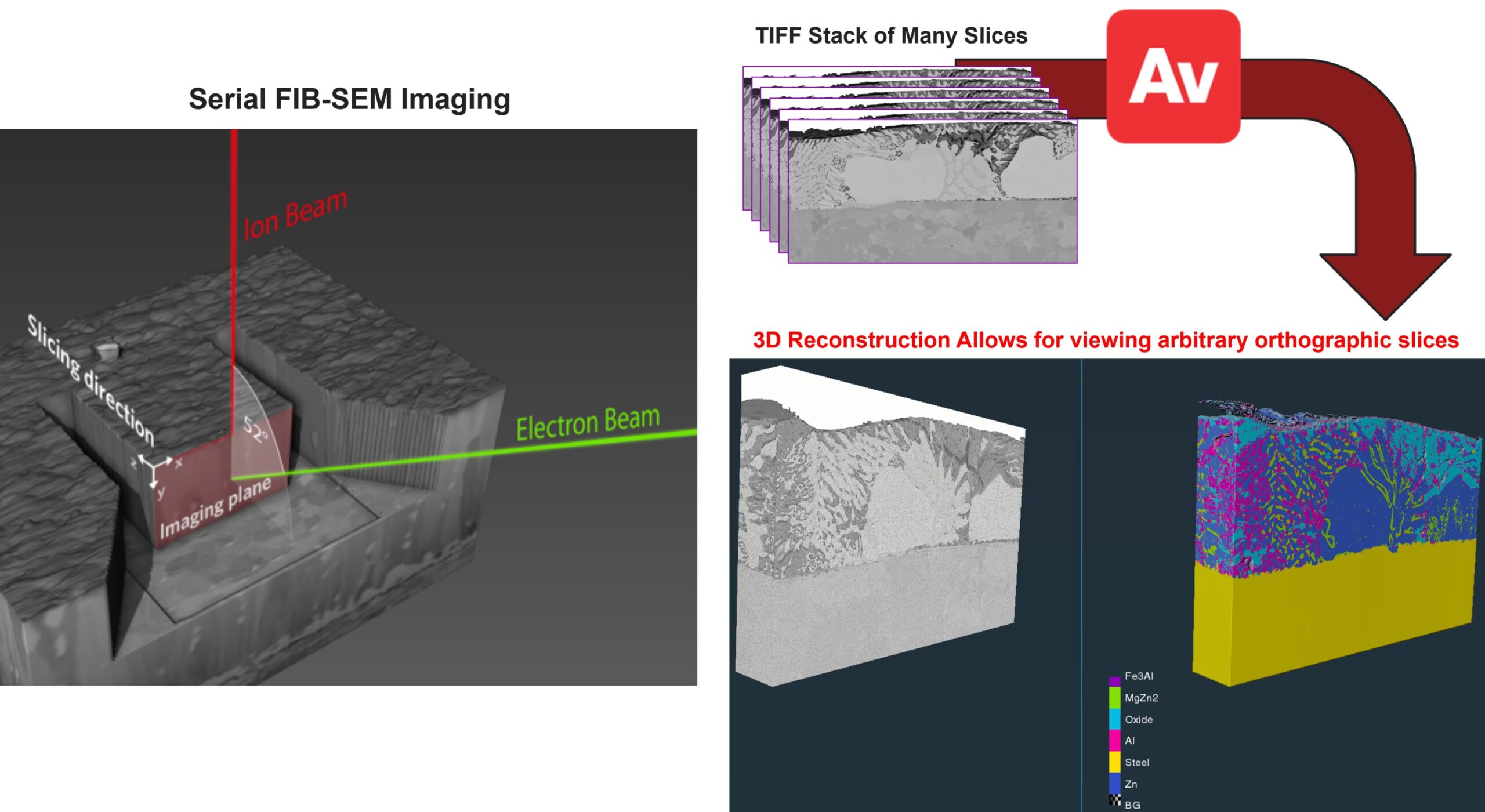
The model’s performance is validated using industry-standard metrics such as F1 score, precision and recall, ensuring results are reliable and reproducible. In this workflow, the 3D evaluation time is reduced by up to 75 per cent compared to traditional slice-and-measure methods, demonstrating both scalability and repeatability.
The improved speed and accuracy of workflows like this not only reduce operational costs associated with poor quality but also help manufacturers proactively optimise coating processes. Early detection of potential adhesion issues or contaminant inclusions enables timely adjustments on the production line, preventing costly failures later on. The scalability of AI-driven workflows also makes it feasible to extend such detailed analyses from research and development labs into high-throughput production environments.
Ultimately, integrating AI into correlative microscopy could transform how we approach automotive coating evaluation. It enhances the objectivity, reproducibility and speed of critical quality assessments, helping manufacturers maintain stringent standards while reducing time-to-market. As AI technologies continue to mature, AI-enhanced microscopy stands to become a crucial tool in the pursuit of automotive excellence.
Thermo Fisher Scientific has a wealth of experience supplying advanced microscopy solutions to automotive manufacturers. To find out more about how AI-enhanced workflows could streamline your operations, get in touch with our knowledgeable team.