
(16th September 2025, Muellheim, Germany) In the fast-evolving world of electric vehicles (EVs) and advanced battery technologies, precision, weight reduction, and thermal efficiency are no longer just engineering targets, they are make-or-break success factors. As OEMs and Tier 1 suppliers race to keep up with design complexity and scale, a highly specialised manufacturing process has emerged as a vital enabler, photo-chemical etching (PCE).
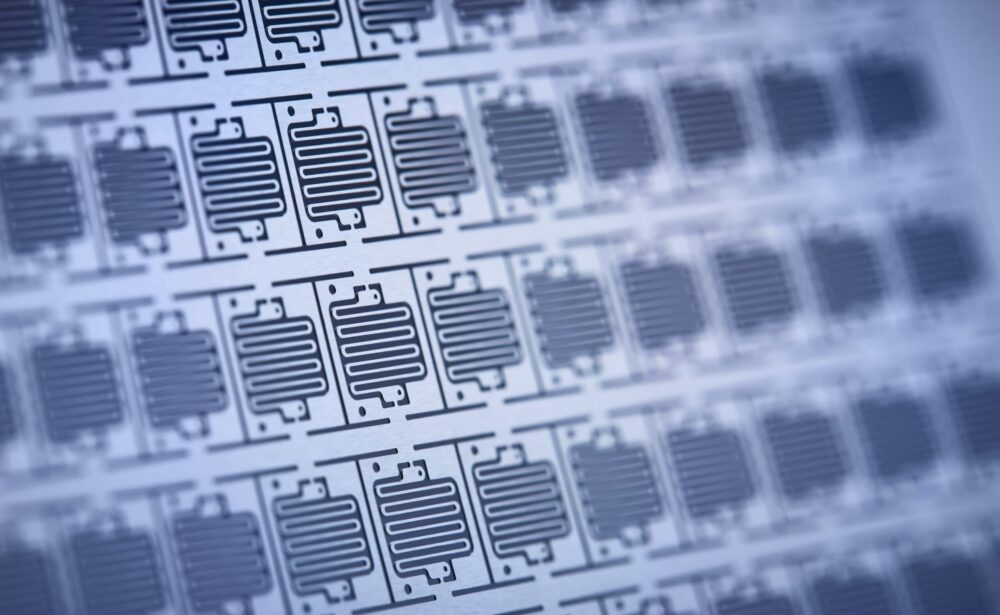
PCE is rewriting the rules for how thin metal components are manufactured. From ultra-precise battery contact plates, current collectors, and busbars, to thermal management parts and EMI/RFI shielding, PCE enables high-integrity features at micron-level precision, without inducing mechanical stress, burrs, or distortion. These properties are critical in components where even minor deviations can affect conductivity, thermal dissipation, and long-term reliability.
Unlike traditional fabrication methods like stamping, punching, or laser cutting, photo-chemical etching offers engineers unmatched design freedom, producing burr-free, flat, and form-ready parts with complex geometries and extremely fine features, often impossible with other methods. The process is highly repeatable and inherently scalable, making it ideal for both prototyping and mass production.
Jochen Kern, Head of Sales & Marketing at the Micro Component Group, believes PCE’s role in supporting next-generation electrification is underappreciated. “The future of mobility is tied to how precisely and efficiently we can manipulate materials. With PCE, we’re enabling the next wave of innovation in EVs and battery tech, not by chasing trends, but by delivering precision that allows engineers to think bigger, design better, and execute faster.”
The Micro Component Group (which includes micrometal GmbH, Etchform, HP Etch, and Thin Metal Parts Inc.) represents a global PCE powerhouse. The group combines reel-to-reel high-volume production capabilities with flexible sheet-fed etching, enabling customers to scale from prototype to series production within one supply chain.
This integrated approach allows the Group to serve both innovation-led start-ups and globally established automotive players with equal agility. The offering is bolstered by value-added services such as forming, overmoulding, parylene coating, cleanroom packaging, and even co-engineering support, meaning customers benefit from a full-spectrum partnership, not just part supply.
Jochen Kern continues, “We’re not just here to etch metal. We’re here to solve problems. Whether it’s improving battery thermal efficiency, reducing part mass, or helping clients scale quickly, we collaborate from the start. That’s why so many of our customers see us not as a supplier, but as part of their innovation team.”
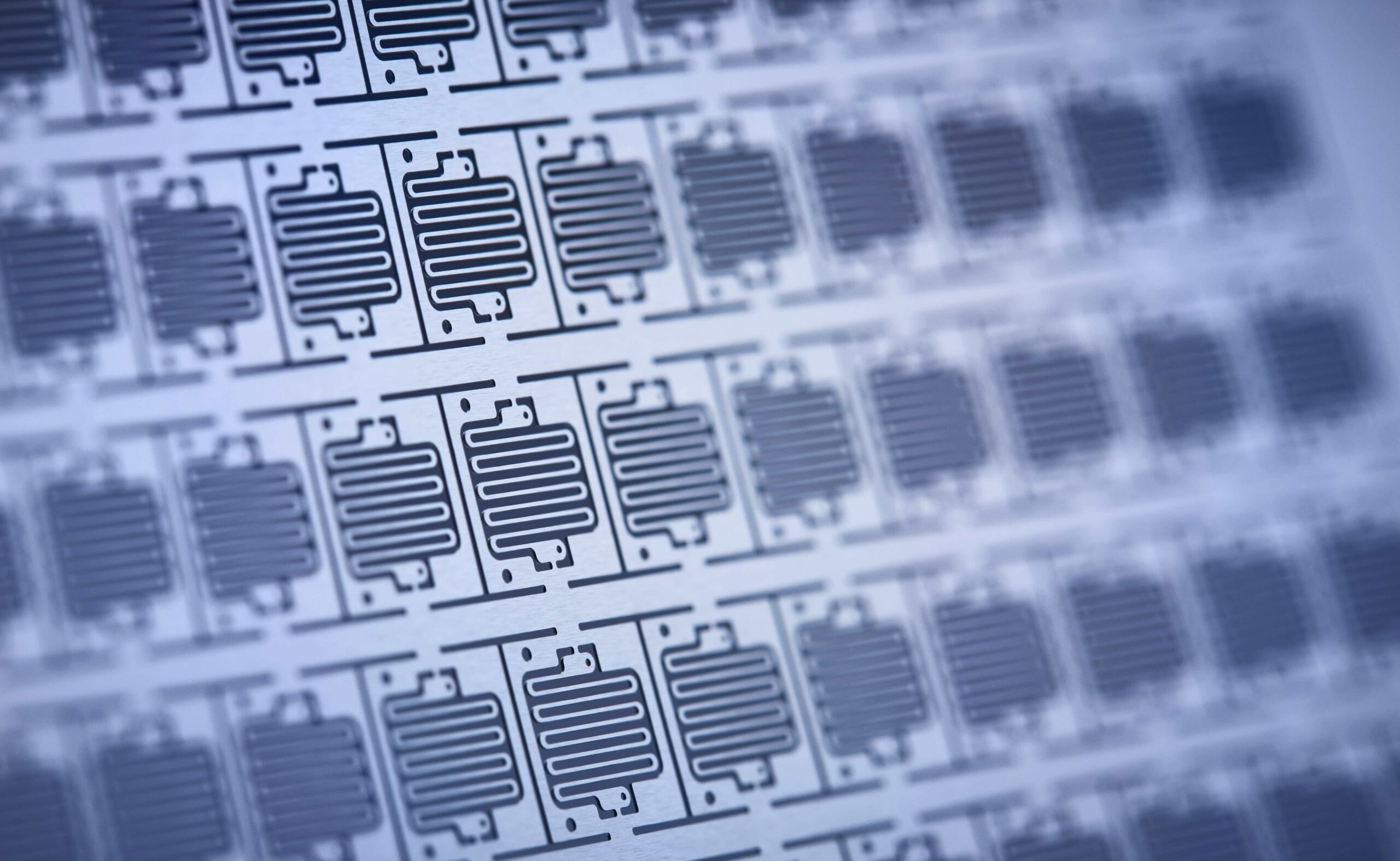
As the EV sector grows in ambition, so too must its supply chain. Processes like photo-chemical etching bring critical advantages, no tooling wear, low setup costs, flexibility for frequent design iterations, and superior accuracy at micron-scale. For manufacturers pushing the boundaries of what’s possible, PCE is more than a process, it’s a strategy.
With sustainability, performance, and reliability in the spotlight, the Micro Component Group is positioned to be a go-to partner for manufacturers looking to turn bold designs into high-performance products, without compromise, and at scale.
To discover how PCE can unlock new potential in your EV or battery components, speak with the Micro Component Group today.