
Engineers be ready, passives are next
The AI memory boom is dominating headlines, but AI infrastructure investment suggests pressure will extend beyond GPUs and high-bandwidth memory. The more important question for electronics manufacturers is how far that demand will spread into the wider component base, and who will feel it last. Here, Chris Withers, sales director at Zel Components, an alternative electronic component distributor, explains why engineers and procurement teams must prepare for shortages across passive component categories, which are coming.
AI systems do not scale on memory alone. They rely on servers, storage, power architecture, networking equipment and the wider hardware needed to support high-performance computing. That is why pressure in one part of the market rarely stays isolated.
As the Ethernet Alliance’s 2026 roadmap notes, “The world is increasingly looking to AI solutions, creating a growing demand for speed and scale.” That matters even for components that sit outside the usual AI conversation.
Upcoming MLCC component shortages
RJ45 Ethernet connectors, magnetics, cable assemblies and broader connectivity hardware may not attract the same attention as processors or memory, but they remain part of the physical infrastructure behind large-scale deployment.
Once hyperscale and data centre demand rises sharply, the effect can begin filtering into adjacent categories that many buyers still treat as routine. The same is true for passive devices.
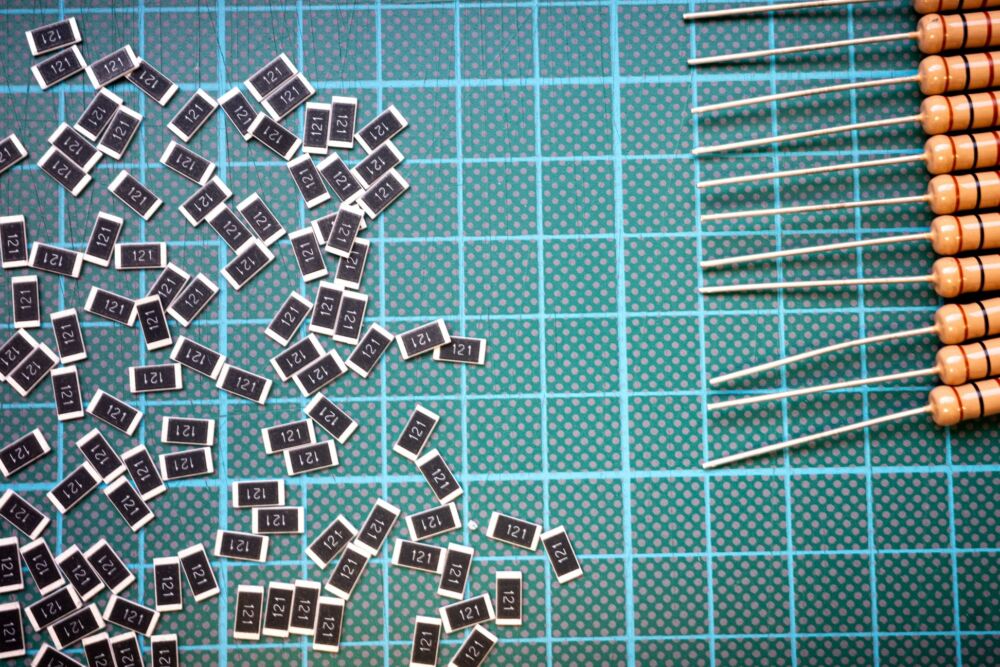
Multilayer ceramic capacitors (MLCCs), in particular, are easy to overlook when compared with memory or microcontrollers. However, they sit in almost every design and can become a bottleneck very quickly if availability tightens.
From conversations Zel Components had at Hardware Pioneers Max 2026, we expect these shortages to hit engineers before they see it coming.
An industry report on the AI drives MLCC shortage echoes similar concerns. It states, “market analysts and distributors warn that high-capacitance MLCCs are entering a period of shortages as tier-one manufacturers divert production lines to support the rapid expansion of AI infrastructure.”
For context, AI servers use 10 to 15 times the number of MLCCs in comparison to general-purpose servers. As well as driving volume, this also creates demand for ultra-high capacitance and high voltage MLCCs, which require more advanced technologies.
The report adds that, as a result, major suppliers are shifting production capacity toward components for AI applications, which is already “constraining the supply flexibility of consumer MLCCs quarter by quarter.”
Help or hinderance?
So, is the AI boom a help or a hindrance? Well, in the longer term, AI-led investment may improve visibility. It might also encourage capacity expansion and support better forecasting across the electronics industry.
Whereas in the near term, fast-moving demand is more likely to favour the biggest OEMs first because they are generally better placed to commit early. They can then negotiate allocation and protect continuity on the components they see as most exposed.
For SMEs, module manufacturers and more price-sensitive buyers, so the risk tends to arrive later. Not necessarily as an immediate market-wide shortage, but as patchier availability, narrower sourcing options and longer lead times in categories that were previously straightforward to buy.
That is often how supply pressure moves through the market. First at the highest-value and highest-volume end, then outward into the wider ecosystem once stock buffers begin to thin.
Managing supply chain risk
Engineering and procurement teams should not wait for shortages to appear before reviewing supply chain resilience. Once lead times begin to extend, the opportunity to qualify alternatives becomes far more limited.
One of the most effective ways to reduce risk is to identify and approve alternative components before they are needed, which includes pin-for-pin replacements and equivalent components that can be introduced without significant redesign work.
For widely used passives, interface devices, microcontrollers and connectivity hardware, approved alternatives reduce dependence on a single manufacturer. Crucially, it also gives procurement teams flexibility when availability changes, with inventory already secured ahead of upcoming shortages.
Because the risk is not only the first shortage, it’s the one that arrives after larger buyers have already moved. If AI demand is only at the start of a broader infrastructure surge, then memory is just the beginning.
The task for the rest of the market is to see that pressure early, and not let it catch you by surprise.
For more information on pin-for-pin alternatives and ways to reduce distribution risk across current designs, visit the Zel Components website.