Adhering to the strictest food safety standards, Corson Grain Products is one of the largest maize milling operations in Australia. At its remote Queensland site, the company recently installed a robust Fortress Technology gravity Stealth metal detector with local configuration and service support.
The success of this installation in 2024 did not go unnoticed by New Zealand-based parent company Corson Grain. Impressed with the performance and reliability of the gravity system located at the Warwick mill, Corson Grain proceeded to order two additional Stealth metal detectors for its Gisborne mill. These systems, installed in June 2024, were sourced directly from Fortress Technology NZ, a move that underscores the milling group’s ongoing commitment to food safety, quality assurance and support for the local economy across its operations.
Located in the agricultural heartland of southeast Queensland, quality control for Corson Grain Products is entirely dependent on the reliability and performance of its equipment to prevent production disruptions. In addition to being a rural location, there are many operational challenges in milling environments. Among them high vibrations and electromagnetic interference, which can cause false readings and product waste if detectors are not of the highest-quality or correctly positioned and calibrated properly.
Zero waste food safety commitment
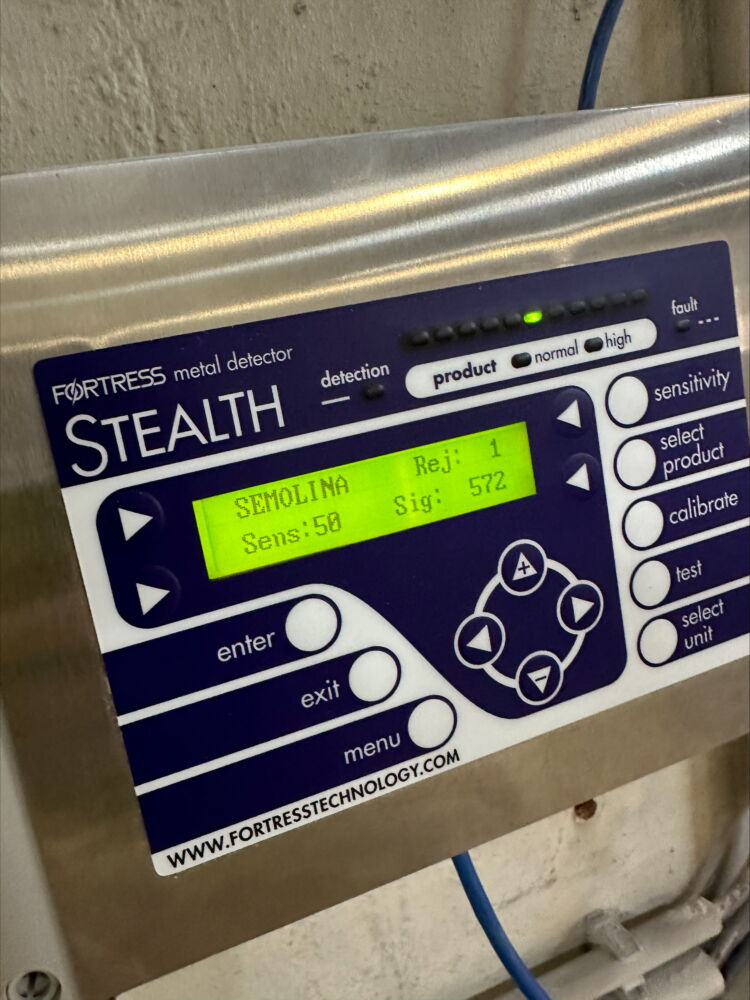
Ensuring adherence to the most robust food safety certification requirements, including HACCP, BRCGS, HALAL, PIF, GMO-free statements and MPI Approval, the Fortress Technology Stealth Gravity metal detector supports the milling company’s zero-waste policy.
Tim Briggs, Production Manager at Corson Grain Products in Queensland explains: “The system delivers exceptional metal detection performance, effectively preventing contamination and minimising unnecessary product waste. This commitment aligns with Corson Grain’s dedication to robust food safety practices and zero waste policies.”
The long-term reliability of Fortress Technology equipment played a key role in the upgrade decision. A Fortress Phantom metal detector, which had operated in the New Zealand plant for over 20 years, was relocated to the Queensland site and assessed following transit. While the unit had delivered decades of dependable performance, the team determined that investing in a next-generation system would better support future operational goals.
According to Tim, the Stealth metal detector proved itself the moment it was installed. Equipped with noise immunity and digital filters, the latest Stealth model delivers exceptional sensitivity, reliability and food safety assurance.
The Queensland team particularly appreciates the detector’s accuracy in identifying contaminants, its user-friendly operation and the straightforward installation process. These features collectively contribute to reliable quality control and streamlined production, reinforcing Corson Grain’s reputation for excellence in the milling industry.
Transitioning to hourly automatic testing
Several months after the installation of the Stealth metal detector, the Queensland site activated the Fortress Technology Halo Automatic Testing feature. By integrating Halo Automatic Testing, Corson Grain Products has strengthened and future-proofed its inspection programme, ensuring that it remains robust and adaptable as compliance and verification standards evolve within the industry.
Currently, the team validates machine performance by dropping ferrous, non-ferrous and stainless steel test balls through the metal detector aperture every hour. This regular testing procedure confirms that the reject mechanism is functioning correctly and ensures compliance with machine performance validation requirements.
Optimising the vertical footprint
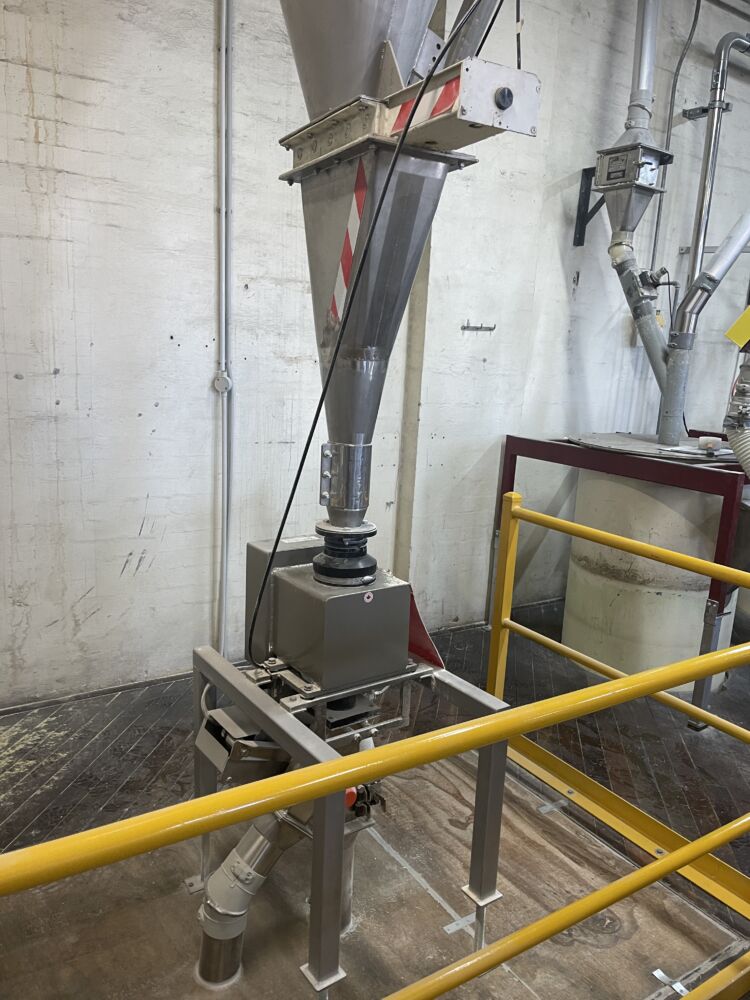
Positioned under one of five maize storage silos on a mezzanine floor, milled product trickles through the metal detector aperture. “This is a relatively slow flowing application, inspecting approximately two tonnes of GMO-free maize flour per hour. The bulk bag filling station is located directly underneath the mezzanine floor,” explains Simon.
Maize is brought into the mill from the silo storage where it is weighed, pre-cleaned and transferred to the conditioning bin to soften the skin. From there it moves into the degerminator which skins and breaks the kernels for optimum milling. It then moves through an array of metal rollers, plates and sifters. “This precise process is why we are so meticulous in our choice of metal detection equipment and localised support,” adds Tim.
Corson Grain Products had to adapt the reject configuration. The reject pipe was extended to direct rejected product through the flooring to a separate collection bin on the ground floor.
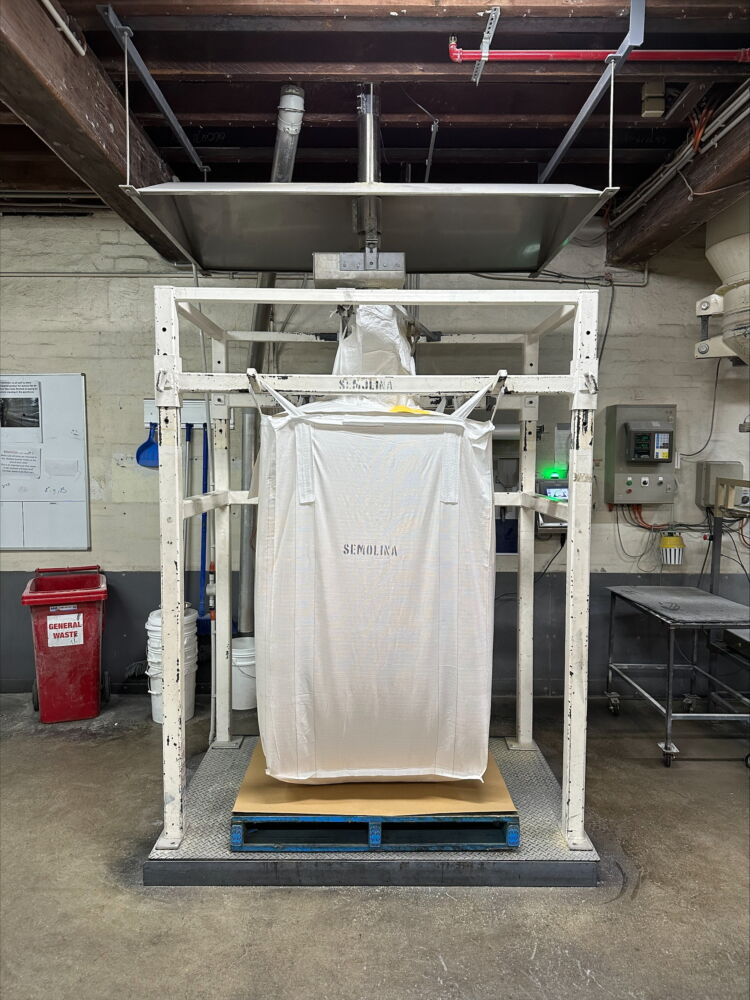
By utilising vertical space, the mezzanine ‘inspection’ floor doubles the usable area, separating the milling and dispensing process from the ground-level packaging site, while allowing for the integrated, gravity-fed removal of reject materials through the floor. For ease of programing and calibration, the metal detector control panel is located on the lower floor beside the milling sacks.
Satisfied with the performance and reliability of the Queensland metal detector, Corson Grain subsequently acquired additional Fortress Technology systems for their Warwick facility and New Zealand site.