~ Charting the evolution of an ergonomic sensing device ~
Imagine if we could measure touch the way a camera captures light or a microphone records sound. At PPS, the solution was to create the TactileGlove. Packed with capacitive sensors, this device turns human touch into measurable data. Here, Gordon Dobie, Director, and Charles MacLeod, Technical Consulting Engineer at tactile sensing technology specialist PPS, delve deeper into the glove’s evolution, explore its real-world applications, and look to the potential of the next generation.
Since its initial release in 2015, the glove has been through several refinements. What began as a relatively fragile instrument with limited sensors has evolved into a robust ergonomic device now used across industry, healthcare and sport. Its full potential has not yet been realised.
Origins in touch sensing
The TactileGlove evolved from an earlier PPS innovation, the FingerTPS system, first launched in 2002. FingerTPS was designed to measure the forces applied by the fingertips. It quickly found value in research and product development, but its scope was limited to just a few sensors.
The glove was created to extend that principle across the entire hand, including the palm. The first version enabled engineers and ergonomists to measure exertion during real-world tasks. This included industrial actions such as cutting sheet metal with shears, lifting heavy boxes, or performing precise assembly tasks.
The aim was to provide quantifiable data on hand use. Manufacturers could identify points of high strain, reduce the risk of repetitive injuries and design processes that protect workers’ long-term health. At the same time, the data opened new opportunities in product design, from household tools to improving car interiors.
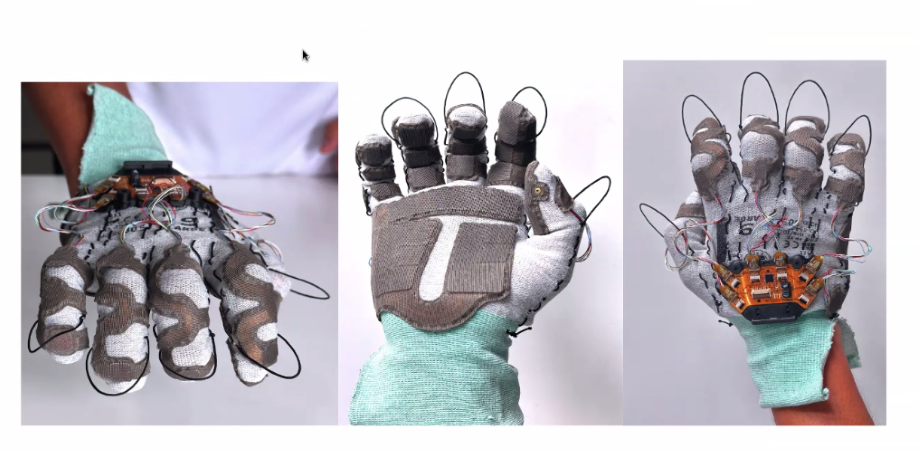
Early prototypes
The first prototypes were functional but far from perfect, with 53 sensing elements positioned across the glove. While this provided a useful first step, demand soon grew for more detailed information. Later versions expanded coverage to 65 sensing elements, giving a fuller picture of how force is distributed across the hand, palm and fingers.
Comfort was another challenge. The early smooth-finish gloves were let down by bulky seams that made extended wear uncomfortable. PPS engineers switched to a woven fabric outer layer, striking a balance between durability and fit. This design was lighter, more flexible and resistant to wear and tear. Pull tabs were added to allow safe removal without damaging the glove. Over time, a broader range of sizes ensured that more users could benefit.
Alongside design changes, PPS worked continuously to improve accuracy. Each glove goes through a rigorous calibration process. This ensures consistency across units and reliability across a wide range of uses.
In partnership with the University of Strathclyde, PPS has refined its calibration methods to account for factors such as ambient environment and user body temperature. These subtle variables can affect readings, and addressing them has been crucial in ensuring the glove performs in both laboratory studies and demanding industrial settings.
Technology leaps
The capacitive sensing technology used is more often associated with phone touchscreens, but PPS adapted for pressure and force measurement.
The latest generation of TactileGlove incorporates Bluetooth 5 connectivity, enabling faster, more reliable data transfer with extended range. Sampling rates now vary from 10Hz to 50Hz, supporting real-time grip analysis and motion capture. This allows live data streaming into analysis software, where engineers, therapists or trainers can instantly visualise hand forces in action.
With every iteration, the TactileGlove becomes more robust, more accurate and more practical. The current focus is on increasing data throughput, improving removal systems and expanding the glove’s fit range.
PPS’s vision extends beyond today’s applications. In the near future, gloves like this could be integrated into smart factories, providing continuous monitoring of worker safety. In parallel, opportunities in sports performance, rehabilitation and consumer wearables are set to grow.
This is how the TactileGlove is becoming to touch what the camera is to sight and what the microphone is to sound.
To find out more about the TactileGlove along with studies carried out by the academics in partnership with PPS, visit the company’s website.