
Food safety specialist Fortress Technology discusses how processors can maximise the value of automation on contaminant detection lines, and why being smarter is not just about rolling out new technologies but also optimising the systems you already depend on.
In the modern food industry – where brand loyalty is fragile – there is little room for error. A single quality or safety lapse has the power to cause irreversible damage to a company’s reputation, erode profit margins and stall future growth.
Intelligent contaminant detection systems are key to minimising these risks. However, even the most advanced technologies are not immune to performance drift. With fast-moving production and increasingly complex supply chains, maintaining consistent inspection accuracy is critical.
“Brand protection begins at the point of prevention,” states Phil Brown, Sales Director at Fortress Technology Europe. Like any precision equipment, inspection systems require routine calibration, maintenance and testing to sustain optimum sensitivity, ensure fail-safe functionality and remain a reliable preventive control.
WHY AUTOMATE PERFORMANCE CHECKS?
Ultra-sensitive inspection systems are vital for food safety. Yet, their reliability hinges on the strength of the processes supporting them. Investing in innovative technology without implementing routine checks, automated testing and digital data collection undermines its effectiveness, increasing the risk of undetected issues at the final checkpoint.
High-throughput wholesale, ingredient and food processing environments amplify these challenges. Under GFSI and HACCP standards, every industrial food metal detector must be tested using ferrous, non-ferrous and stainless-steel test samples at the start and end of each shift, sometimes hourly and between every product changeover.
With output per hour being a critical productivity metric, machine uptime on any heavy product application inspection line is essential. Manual testing is time-consuming, vulnerable to human subjectivity and error, and often more challenging due to the weight of packaged products, equipment positioning and access difficulties. Maintaining the proper oversight required from modern food safety standards without automation is resource intensive, error-prone and a constant challenge to document consistently.
A PRACTICAL, SCALABLE ALTERNATIVE
Automated testing systems are reshaping how food processors verify inspection performance. By replicating the presence of contaminants at a pre-programmed “worst-case” positioning in the product flow or pack, they remove the guesswork, variability and safety risks inherent in manual testing. Tests can be triggered manually, remotely or run automatically on a schedule, ensuring consistent results without interrupting production.
Key benefits include:
- Standardised, reliable testing free from human error
- Reduced labour and operational costs
- Improved workforce safety by removing manual test procedures
- Reduced product waste by avoiding test sample recovery
- Increased uptime, throughput potential and opportunities for growth
- Tamper-proof digital audit trails that support compliance and traceability
- Ability to increase test frequency without requiring additional labour.
Fortress Technology’s Halo Automatic Test system exemplifies this approach. It generates a calibrated signal mimicking a metal contaminant while delivering real-time, verifiable data. By eliminating the risk of missed or inaccurate tests, manual subjectivity and data gaps, Halo enables processors to maintain QC standards without slowing production.
The ROI can be rapid. With daily Run Time Equivalent (RTE) costs estimated at £200 – £250 per metal detector and UK food production supervisors earning on average £34,600 annually, labour savings alone can recoup the investment in months.
One company already seeing tangible results is Ardent Mills. Processing and packing over 22 million bags of milled product annually, Ardent activated the Halo software on several of its Fortress conveyor metal detectors. A built-in blue light indicator now clearly distinguishes test cycles from contamination events, eliminating unnecessary rework and waste. “This feature alone has significantly reduced product waste,” states Packaging Engineer Manvine Bharj. “Without it, we’d potentially have to manually re-inspect up to 600 lbs of flour per line, per shift.”

Like any precision equipment, inspection systems require routine calibration, maintenance and testing to sustain optimum sensitivity, ensure fail-safe functionality and remain a reliable preventable control.
SUPPORTING INTEROPERABILITY
Automation is only part of the equation. To unlock the full potential of Industry 4.0, inspection technologies must integrate with broader strategic and food traceability plans. This helps to ensure that data is actionable across an entire production facility, as well as scalable.
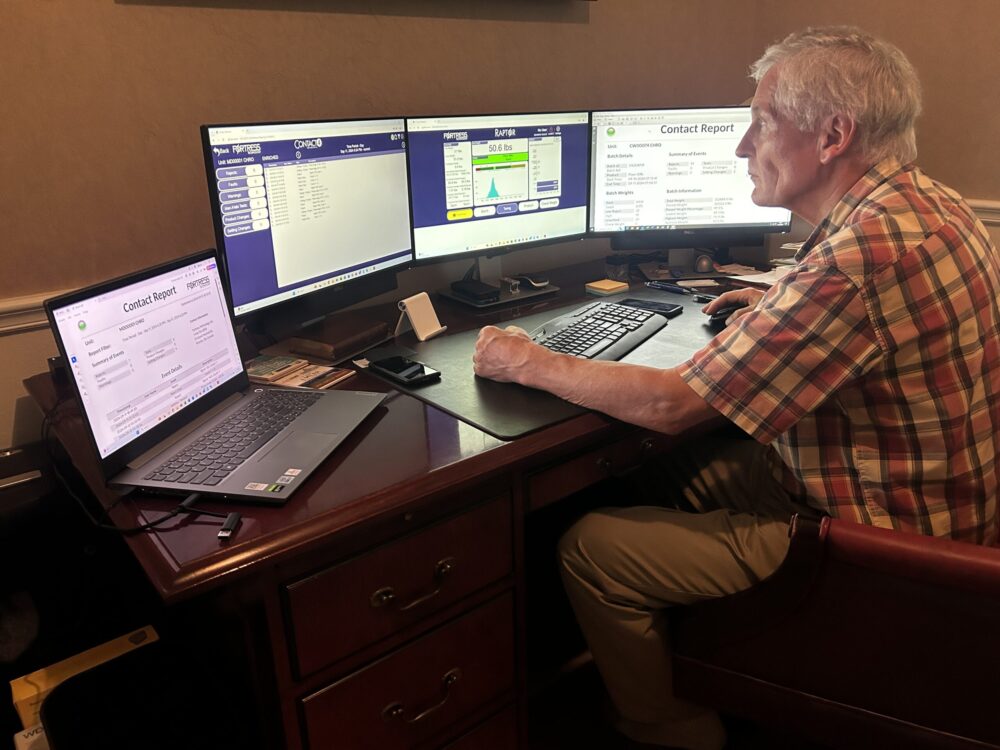
Technologies like Contact 4.0 deliver exactly this. Using OPC UA connectivity, multiple machines can be networked to provide a single view of inspection performance. This live data helps processors generate full-site compliance reports, track Overall Equipment Effectiveness (OEE), and feed performance insights directly to QA and technical teams.
Tethering multiple front-end production machines to back-end reporting software in real time, Fortress Technology’s Contact 4.0 solution has enabled real-time monitoring across several Mennel Milling facilities. “Every morning, we receive an automatically generated report to support our decision-making,” explains Senior Corporate Packaging Engineer Dieter Flick. “Contact 4.0 displays checkweigher histograms, reject data, and product giveaway trends, helping us pinpoint upstream filling issues before they escalate.”
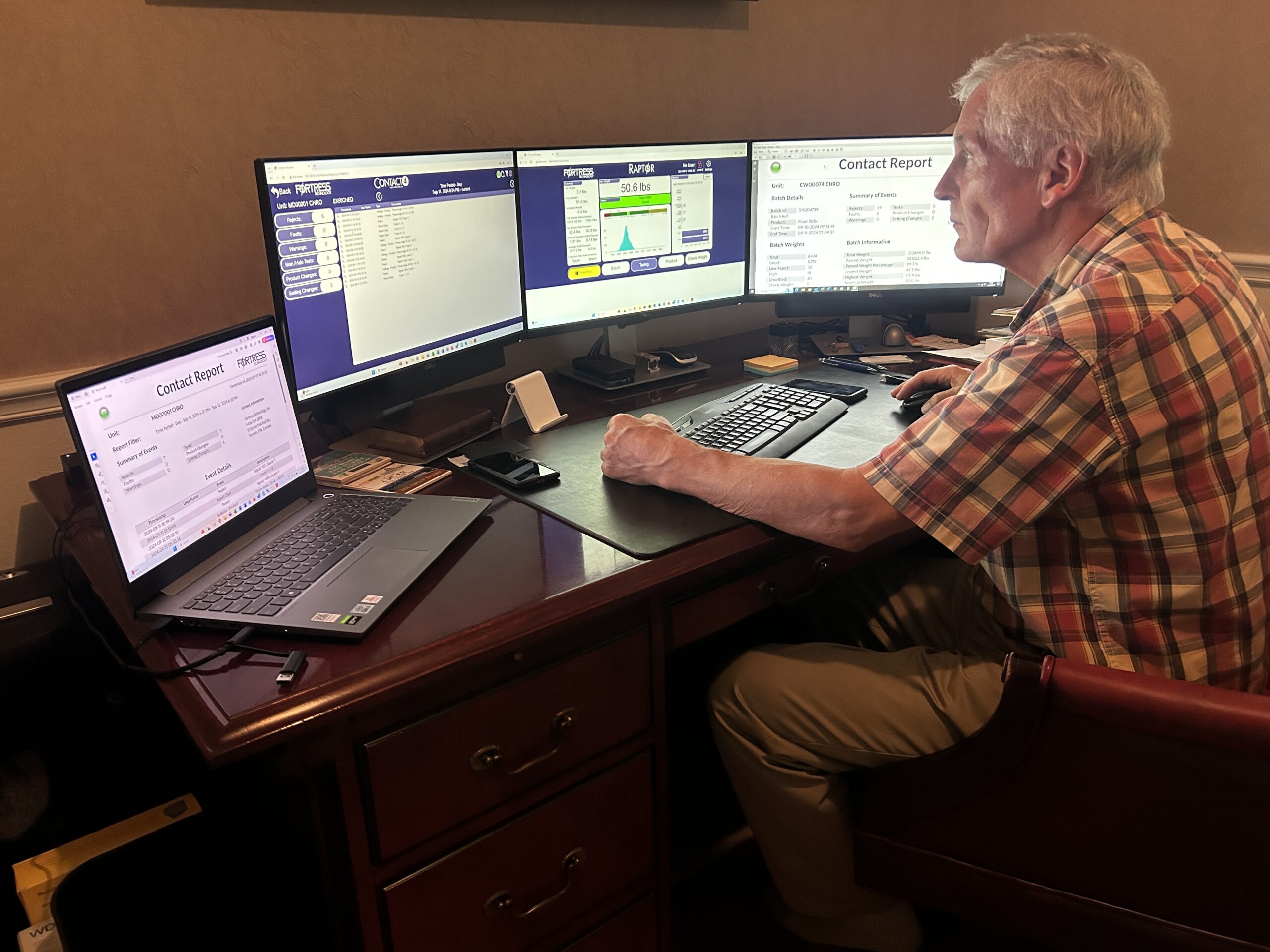
contact 4.0 displays checkweigher histograms, reject data, and product giveaway trends at mennel milling, helping to inform product decision making.
MAXIMISING SAFETY AND PRODUCTIVITY POTENTIAL
As food factories become increasingly connected, the volume of available data offers unprecedented control over production, efficiency and safety. By automating inspection testing, centralising data and utilising digital analytics, food processors can detect faults faster, act on issues sooner and maintain full traceability with ease.
Phil expands: “Connectivity is the foundation of any digitalisation strategy. However, the real value comes from how the data is analysed – identifying trends and patterns that drive smarter business decisions.”
Industry 4.0 isn’t just about adopting new technology; it’s about connecting and optimising the systems you already rely on, repeats Phil. For food processors operating in any sector, the payoff is clear: fewer errors, less waste, and a safer, more efficient supply chain.