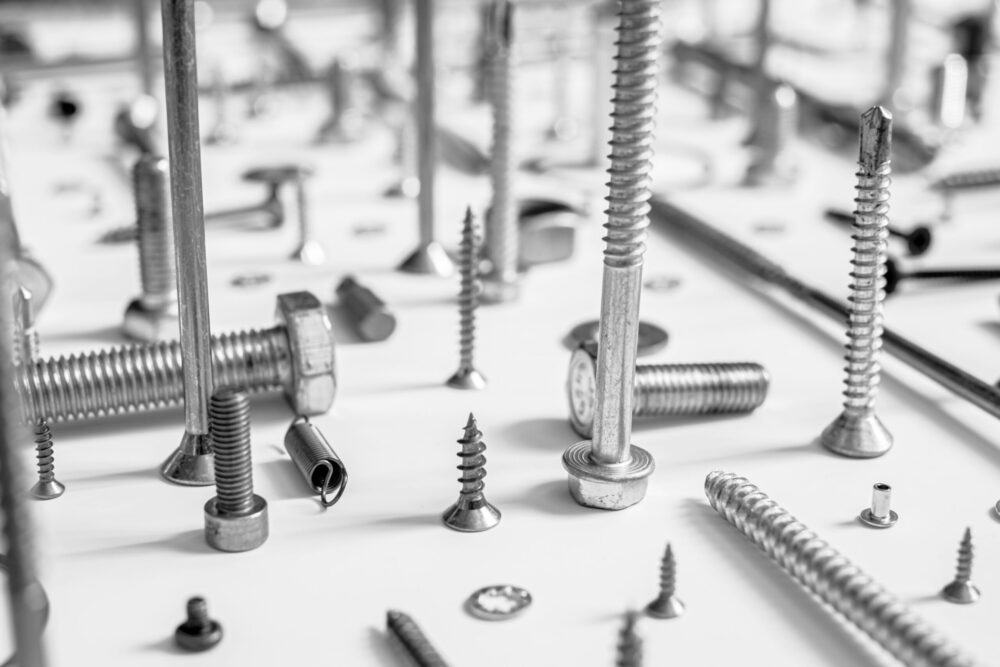

Patrick Faulkner, Lead Engineer at Accu, discusses the challenges of finding the right screws to use in confined spaces.
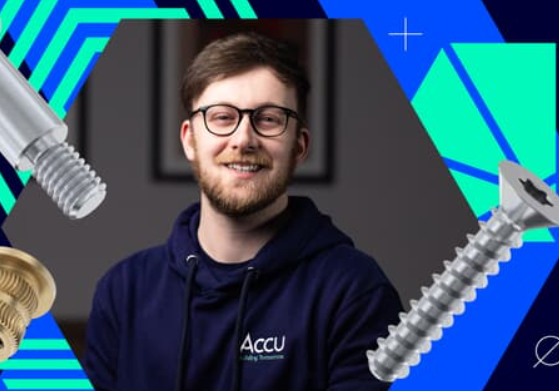
Patrick Faulkner
“Engineering projects often require work to be carried out in small, confined spaces where access, visibility and manoeuvrability are limited. In these space restricted places, fastener choice and installation method can have a significant impact on assembly time, reliability, maintenance and long-term performance.
Finding the best solution for confined spaces
There is no single screw that can be described as the “best” fastener for confined-space applications. Instead, fastener choice is decided by the specific challenges of the job, the function of the assembly and the practical realities of installing and maintaining components where access, visibility and movement are limited.
Confined spaces place distinct demands on both fastener design and installation method. Seemingly minor decisions, such as head profile or drive type, can have a disproportionate impact once the assembly is enclosed and access is restricted.
Clearance of the fastener
In many confined assemblies, clearance around the fastener is as much a constraint as access to it. A protruding screw head can interfere with moving parts, restrict airflow or prevent panels from seating correctly.
For example, a machinery guard installed within a compact housing may initially appear straightforward to assemble on the bench. However, once installed in situ, even a small protrusion from a pan or button head can create snag points during operation or damage adjacent panels or components. In these situations, countersunk head screws are often specified to ensure the fastener sits flush and does not introduce secondary interference issues once the machine is in service.
Similarly, in electronics enclosures or control cabinets, internal clearance is often tightly managed to accommodate wiring, connectors and cooling paths. A raised fastener head can obstruct cable routing or place stress on insulation, making low-profile solutions preferable even where load requirements are modest.
Tool access and drive type limitations
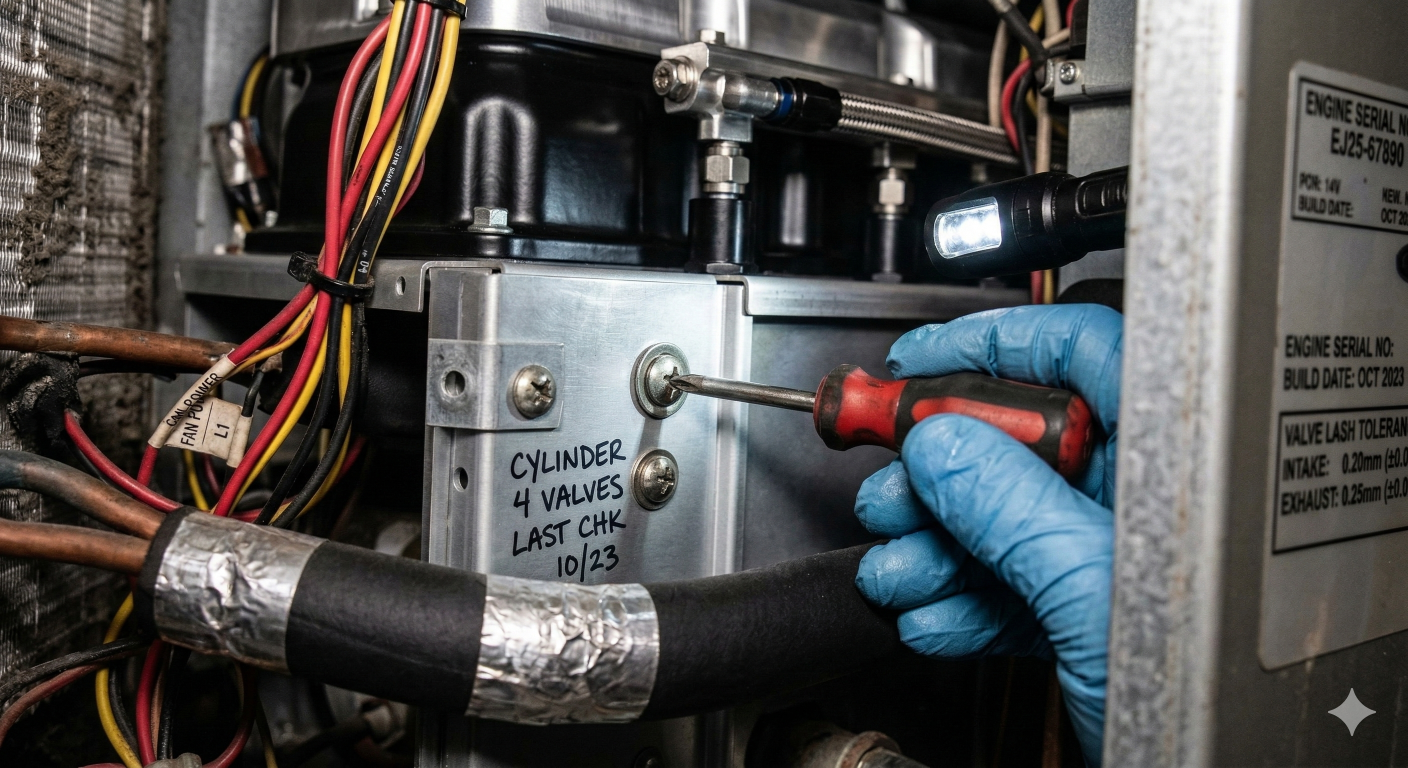
Tool access is frequently more restrictive in confined spaces and access may be available only at an angle or through a narrow opening.
A common example is the installation of fasteners behind a structural frame member or within a deep recess. Slotted, Phillips or Pozi drives typically require straight-line access and precise axial alignment. In a confined setting, achieving this alignment can be difficult or impossible, particularly when working one-handed or at arm’s length. The result is often cam-out, damaged drive recesses or inconsistent tightening.
Hex socket-driven fasteners offer a practical alternative in these scenarios. Allen keys allow torque to be applied laterally, making it possible to drive screws even when direct access is blocked. For deeply recessed fasteners, the longer arm of the key can be used to reach into the assembly without requiring additional clearance around the head.
Where the application requires a specific drive type, such as Torx or security drives, ratchet handles fitted with suitable bits can provide similar advantages. Their minimal swing arc allows controlled tightening in spaces where a full rotation of the tool is not possible, such as inside narrow housings or between closely spaced components.
Rotating or sliding components
Some confined-space challenges are driven not by access, but by function. Rotating or sliding components, such as shafts, collars, pulleys or linear guides, often cannot tolerate any external protrusion from the fastener.
In these applications, even a low-profile head may interfere with movement or alignment. Grub screws are commonly used in these situations, as their headless design allows components to be secured entirely within the envelope of the assembly. Their internal drive enables adjustment and locking without introducing external obstructions, making them well-suited to compact mechanical systems. However, the confined nature of these assemblies also means that over-tightening or drive damage can be difficult to correct. This reinforces the importance of controlled torque application and appropriate tool selection when working with headless fasteners in restricted spaces.
Installing and handling multiple components in tight spaces
In confined environments, handling small, loose components can be one of the most significant sources of delay and error. This is particularly true in projects where multiple fasteners and washers must be installed in a limited space
For example, when assembling electrical panels or compact electronic housings, installing a separate washer and screw may require two-handed operation, precise alignment and clear visibility, all of which may be compromised once the enclosure is partially assembled.
SEMS screws help address this issue by combining the screw and washer into a single pre-assembled captive component. By reducing the number of loose parts that must be handled during installation, SEMS screws can improve consistency and reduce the likelihood of dropped components, particularly in confined or enclosed assemblies.
In situations where personal protective equipment (PPE) further limits dexterity, thumb screws can also offer advantages. Gloves and other protective equipment can make it difficult to manipulate small tools or achieve precise tool alignment, especially in spaces where visibility is limited. Thumb screws remove the need for tools altogether, allowing fasteners to be installed, adjusted, or removed by hand.
This can be particularly useful for access panels, inspection covers, or components requiring frequent adjustment, where speed and ease of operation are prioritised over high preload. The larger gripping surface of a thumb screw makes it easier to apply controlled tightening even when tactile feedback is reduced by gloves and eliminates the risk of tool slippage or dropped tools within the assembly.
However, thumb screws are not suitable for all confined-space applications. Their hand-tightened nature limits the achievable clamping force, making them more appropriate for non-structural fastening and repeated access rather than permanent or load-critical joints. As with SEMS screws, sufficient clearance must also be available around the fastener to allow hand operation.
In assemblies where one-sided access is unavoidable and future disassembly is not required, rivets may also be considered as an alternative to screws, as they can be installed without precise thread alignment or visibility of the opposite side of the joint.
By selecting fasteners that reduce loose parts, minimise tool reliance, or accommodate reduced dexterity, engineers can significantly improve installation reliability and efficiency when working in confined spaces — particularly where PPE use is unavoidable.
How do you fit a screw in a tight space where you can’t see?
Installing a screw with limited visibility requires tooling that tolerates restricted access and misalignment. Stubby or offset screwdrivers can help where clearance is limited, while ratchet handles allow controlled tightening with minimal swing arc. For socket-driven fasteners, Allen keys are often effective as they allow torque to be applied laterally rather than directly in line with the screw.
Where safe and permitted by PPE requirements, initial thread engagement can be checked by touch before tightening to reduce the risk of cross-threading.
In some cases, rivets may be considered instead of screws. Rivets can be installed with one-sided access and do not require thread alignment, making them suitable for enclosed panels or thin sheet materials. However, they are permanent fasteners and are best used where future disassembly is not required.
The choice between screws and rivets depends on whether the joint must remain removable, the degree of alignment control available, and the practical constraints of access and visibility.
Selecting the right screw for a confined-space application is ultimately about reducing risk at every stage of the assembly process. By reducing risk, this minimises the need for maintenance and improves long-term reliability of fasteners in confined spaces.”
For more information on screws and fasteners from Accu visit www.accu.co.uk.

About Accu
Accu is the new kind of component company. Whether a customer needs one component or millions, its industry-leading e-commerce store offers clear online stock visibility for over 500,000 components. Engineers and innovators are empowered by same-day dispatch and fast, accurate delivery. Get Building Tomorrow – one component at a time.