INTERPACK 2026, Hall 11 Stand D74-10
At Interpack 2026, the packaging industry is addressing several significant trends. Among the most prominent are the importance of integrated line coordination, the drive to increase throughput using advanced process automation, and the need for agility to adapt when SKUs, packaging materials and case sizes change.
Endoline Automation is at the forefront of these discussions, demonstrating the adaptability and versatility of its end-of-line semi and fully automated case erecting, packing and sealing solutions. The company’s stand highlights machines and features specifically designed to ease common integration pains.
Visitors can also explore why system integrators like Montech have long valued Endoline’s engineering expertise and flexible and modular approach to end-of-line automation for over 30 years.
Tom Vanderheyden, Sales Director from Montech comments: “With the growing complexity of production environments, he ability to scale systems is becoming even more key to successful integrations. Long-term partnerships are especially critical for continuity when investments are spread out. Our work with Endoline is testament to this. More than anything, as integrators we value the team’s collaborative approach, proficiency and engineering expertise in customising systems to accommodate specific layouts, product types and operational needs.”
Drawing upon this exceptional track record, Export Sales Manager James Ramsey is sharing five practical tips that can help integrators to derisk their machine selection process and turn technical hurdles into competitive advantages.
- Plan for variation
System integration is often a complex process. In a best-case scenario, every machine slots into the exact footprint, connects to existing equipment up and downstream and runs at the same speed. Realistically, it can be fraught with challenges, compatibility issues and spiralling costs.
Rather than clinging to the idea that automation requires a completely new approach, the best systems support flexibility and incremental implementation. Being able to switch between multiple SKUs, handle and seal fluctuating case sizes and adapt immediately to different thickness and weights of card on case erectors are all important considerations that standard machines often overlook. “Plan for variation and scalability to optimise end-of-line investments,” summarises James.
- Research connectivity compatibilities
A primary pain point in packing line integration occurs when equipment cannot connect and communicate with legacy infrastructures. To future-proof investments, check for open connectivity and interoperability. This includes finding out if the equipment supplier has a dedicated team that can provide coding support to connect production data to MES and ERP systems.
Beyond technical connectivity, there is also the psychological and financial burden of downtime. Every hour a line sits idle during commissioning represents lost revenue and
added pressure for manufacturing teams. That’s why it’s important to work with machinery suppliers who offer full Factory Acceptance Testing (FAT) and systems designed for seamless integration, using pre-configured settings and intuitive interfaces.
- Start collaborations early
When a supplier moves beyond the role of a vendor and becomes a technical collaborator, the impact on Overall Equipment Effectiveness (OEE) and true integration is profound. It requires a partner who understands the specific industrial challenges, from floor space constraints to safety standards and the nuances of local operator expertise.
Engaging in early collaboration allows for the development of clear, detailed specifications before any hardware is implemented. This reduces the risk of a seemingly straightforward integration becoming complex due to unforeseen technical requirements.
- Integration is just the beginning
Successful integration continues beyond installation. For any technology to reach its full potential, equipment vendors should offer continuous support and training.
Skilled Endoline engineers, for instance, can assist with troubleshooting, ongoing upkeep of equipment and optimisation. Ensuring a seamless transition to automation and extending the equipment’s lifespan.
Regular maintenance and check-ins primarily benefit the users. “The primary value of preventative maintenance is it keeps equipment running at peak performance. Routine checks also extend the lifespan of equipment and help to prevent unexpected breakdowns that can impact line efficiency,” adds James
- Achieve faster ROI
It is easy to assume that automation is an ‘all-or-nothing’ investment. However, some of the most resilient strategies prioritise modularity and target high impact areas like case erection and case sealing. These often reveal immediate savings just through the reduction in labour costs and fewer errors.
Upgrading specific processes or sections of a line incrementally allows businesses to manage cashflows more efficiently and scale their investments alongside growth. “Iterative deployment supports continuous improvement. It also reduces the risk of failure,” states James. “Streamlining the integration process can often be the most direct route to realising a quicker ROI.”
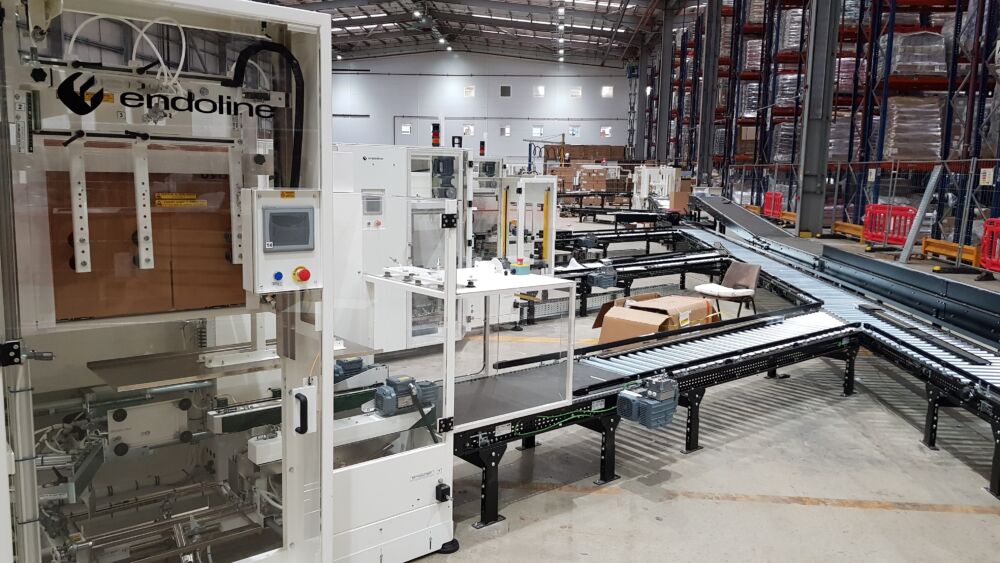
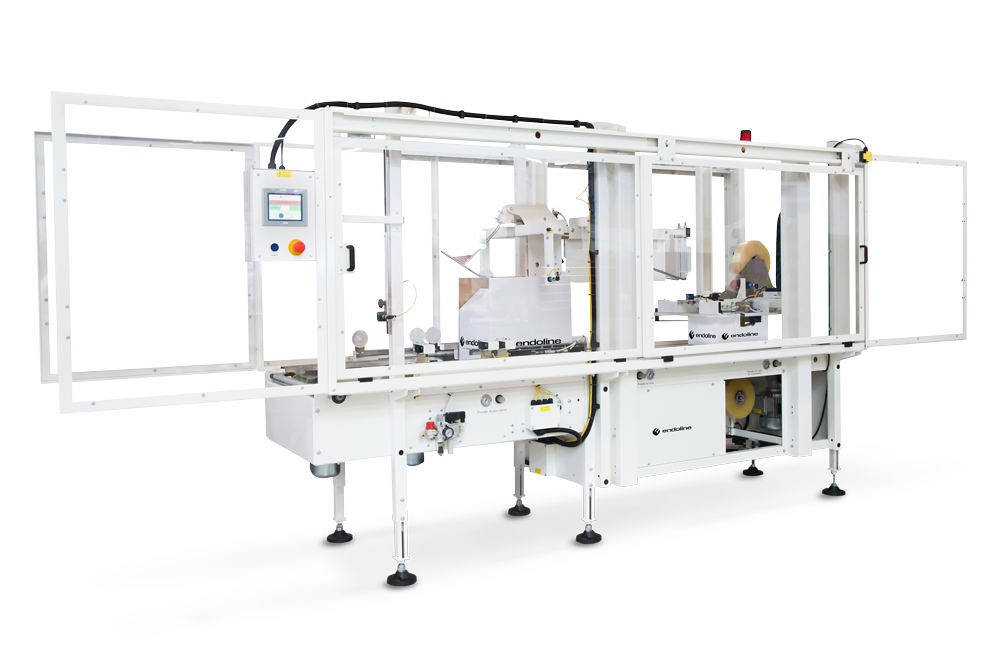
At Interpack 2026, Endoline is demonstrating this shift towards compact, flexible end-of-line packaging systems. The main exhibits include its popular high-speed 221 Case Erector and the Fully Automatic Random Case Sealer (7048).
Visitors can experience these solutions first-hand at Hall 11, Stand D74-10.