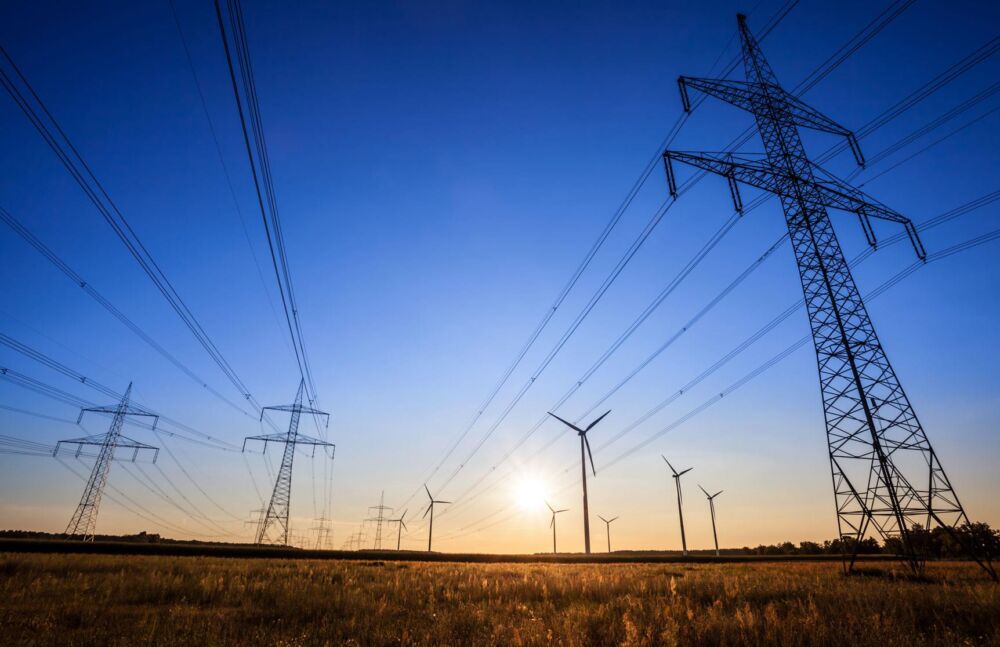

AI data centers, rising urban electricity use and large-scale renewables are putting unprecedented pressure on transmission grids. But building new lines is slow, costly and often controversial. To help grid owners search for a way to maximize transmission capacity without lengthy new construction projects, electrical equipment OEM De Angeli Prodotti built a partnership with carbon fiber composites manufacturer, Exel Composites.
Around 40 per cent of European overhead power lines are over 40 years old, lacking both the capacity and flexibility to transmit the amounts of power that we now produce and use.
Building new transmission lines with new towers can take between eight and ten years, and is nearly impossible in some built-up areas. Here, advanced conductor core technology is the key to making the most out of existing power infrastructure.
Replacing the steel cores in traditional aluminum conductor steel reinforced (ACSR) conductors is the focus here. ACSR conductors have stranded conductive aluminum wires around a mechanically supportive steel core. However, at higher temperatures with increased current, this steel expands and the wires begin to sag, potentially breaking regulations on the acceptable distance from the ground.
These steel cores also conduct some electrical charge away from the aluminum, leading to energy losses during transmission. Adding additional aluminum into cabling will improve electrical capacity, but steel cores leave no room for this extra conductive material as the line is designed according to a specific conductor size.
In contrast, carbon fiber cores are known for their high tensile strength and light weight, which have earned them high-temperature, low-sag (HTLS) status. Conductors with carbon fiber core allow power asset owners to meet ground clearance, meaning the conductor distance from ground regulations even up to conductor temperatures of 190°C.
While building new transmission infrastructure takes up to a decade, reconductoring can be completed within 12-24 months. Advanced carbon fiber composite conductor cores can double the ampacity of the line, also known as the current carrying capacity, addressing immediate challenges in the energy modernization process. These include integration of recently built renewable sources and supply for essential data centers.
Despite their advantages, some issues have so far dissuaded transmission system operators (TSOs) from universally adopting conductors with carbon fiber reinforced cores. One concern is that the first-generation solution of these conductors uses a single strand core and, as these very long components can be sensitive to mishandling, there’s a risk of breaking them. This material sensitivity can lead the constructors and installation crews, more familiar with ACSR or nickel alloy-based INVAR cores, to break the carbon fiber filament while handling it.
For TSOs looking to upgrade their infrastructure swiftly without incurring huge costs, compromising the installation in this way is unacceptable. One solution that smoothed the integration of single-wire conductor cores is De Angeli Prodotti’s ACCS-Sens monitoring system. Here, the aluminum conductor composite single core (ACCS) has three optic fiber wires embedded inside to check the integrity of the core during installation.
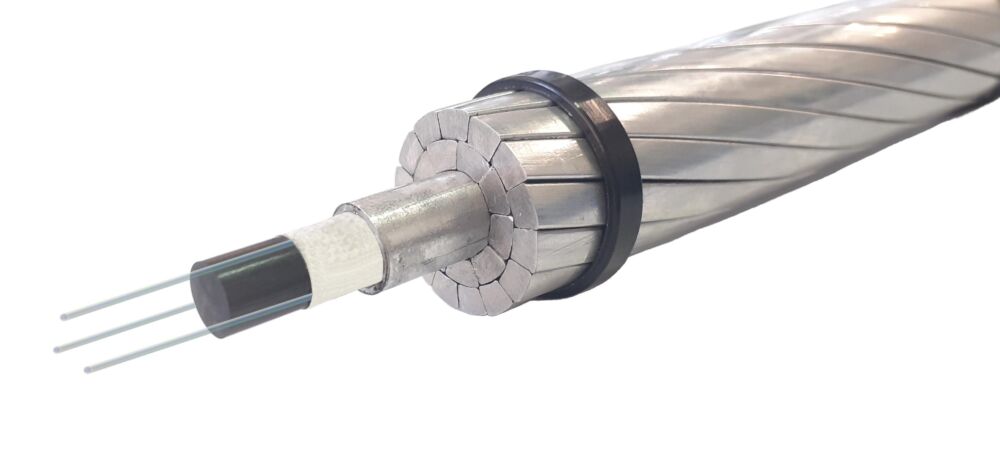
Exel Composites collaborated with De Angeli Prodotti to provide this reassuring fix to TSOs, with hundreds of kilometers delivered on one project in Belgium alone. Even before the two companies developed the ACCS-Sens technology, an alternative was produced. De Angeli launched the aluminum conductor composite multi (ACCM) core as an intrinsically safer version to put TSO’s minds at ease.
“Although the ACCS-Sens provides peace of mind about the integrity of the ACCS core, some grid operators prefer the security of avoiding vulnerability to breakage altogether,” explained Luca Mora, president at De Angeli Prodotti. “This is the reason that we originally partnered with Exel Composites. We needed a carbon fiber core supplier that is reliable, capable, and has enough production capacity to support the development of a new product.”
“Pultrusion is the ideal manufacturing technique for this product,” explained Heini Kloster product manager for conductor cores at Exel Composites. “Because it’s a continuous process, we can produce many kilometers of uniform carbon fiber profile; the only limitation is the length of the fibers themselves. This answers to the need for large capacity production.”
The ACCM core features several carbon fiber wires stranded together inside an extruded aluminum tube. Exel Composites supplies these carbon fiber strands to De Angeli Prodotti, which then strands conductive aluminum around the core. The stranded core gives the conductor much greater flexibility, close to traditional ACSR conductors, making damage during installation and other handling very unlikely.
Most attractive for TSOs is the assurance that comes with the ACCM core. De Angeli Prodotti has published test data, the first of its kind in the conductor core industry, that shows that breakage sustained to carbon fiber strands does not damage the other wires and has no impact on their tensile strength.
“This type of validated data has never been published in this field before, it’s a big step in facilitating the wider rollout of carbon fiber conductor cores,” explained Kloster.
The typical tensile strength of non-damaged carbon fiber strands is around 210 kN, while the minimum guaranteed value to support a power transmission conductor is 147 kN. After conducting multiple experiments, De Angeli found that the tensile strength of an ACCM core with one broken strand did not fall below 172 kN.
Read more about Exel Composites’ role in conductor core technology here.