

By Matt Hale, Global Business Development Director, HRS Heat Exchangers

If hot honey and ‘swicy’ (sweet plus spicy) were the must-try flavour combinations of 2025, then there’s no doubt amongst those in the know that this year’s (literal) hot food trend is ‘fricy’, an intriguing mixture of fruity and spicy.
Google reports that interest in the search term ‘fruity and spicy’ doubled globally between February 2025 and February 2026, and the potential options are increasing. From condiments to salads, stir fries to cocktails, this culinary sensation is introducing consumers to interesting dishes from around the world – such as Mexico’s vasito loco, Filipino pork hamonado or Thai som tam – as well as creating new mashups and flavour combinations. While many of these flavour combinations will be created at home or in restaurant kitchens, the accompanying demand for condiments, sauces and drinks – such as spicy margaritas – presents both opportunities and challenges for food and drink manufacturers.
A festival of flavour
Combinations of spice, heat and fruit are not unique to South America or Asia. Italy’s Mostarda di Frutta has been accompanying grilled and cold meats and cheese for centuries, while North African tagines and Indian chutneys have long combined strong spice flavours and fruit. In fact, there is a scientific reason for the popularity of such flavour pairings – not only does the sweetness help to temper and counter the heat and spice (for example, soothing the taste receptors in the mouth that have been stimulated by capsaicin), but both create pleasure signals in the brain, offering the diner a multi-layered experience greater than the sum of its parts.
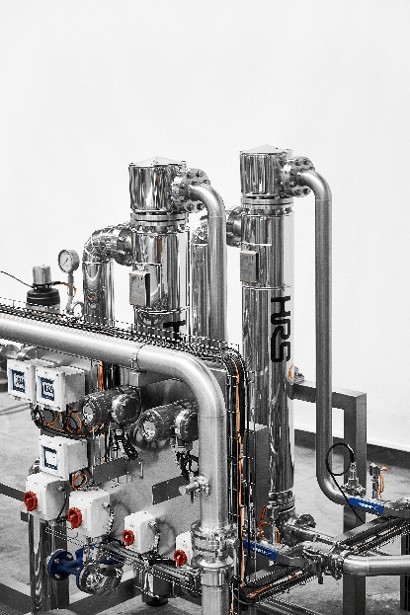
Prior to cleaning, as much product as possible should be removed, to minimise wastage and energy use
Preserving product properties
For manufacturers, the fricy trend presents two key challenges in terms of processing. The first is that the importance of flavour and texture in these (sometimes novel) foodstuffs means that it is vital that processes such as heating, cooling and pasteurisation do not affect the quality or organoleptic properties of the finished product.
Secondly, as an identified ‘trend’, the current demand for many of the more exotic fricy ingredients, like Mexican chamoy or Japanese yuzu kosho, may be somewhat transient. Therefore, being able to produce products in small batches using existing equipment allows companies to trial demand without making significant capital investment to create products which may have limited or finite demand.
Many products which fall into the fricy category will have textures which are as complex as their flavour profiles. Fruit pieces and purees, thick textures and emulsions will need to be preserved during manufacturing and thermal processing, so it is important to choose a heat exchanger that is suitable for both the product and the process.

The HRS Unicus Series of reciprocal SSHEs is ideal for most situations
In many cases, a scraped surface heat exchanger (SSHE) will be required to ensure the necessary combination of product mixing – without damage – plus heat transfer. The HRS Unicus Series of reciprocal SSHEs is ideal for processing fricy foodstuffs as it features separately controlled hydraulic scrapers. Available in a range of designs, the Unicus is fully controllable, enabling a variety of products to be moved gently but effectively through the heat exchanger, providing timely and efficient heat transfer without damaging product integrity. Where more thorough mixing is required, or where materials are particularly thick or viscous (such as hot honey), then the HRS R Series, with its proven rotary scraper action, is more suitable.
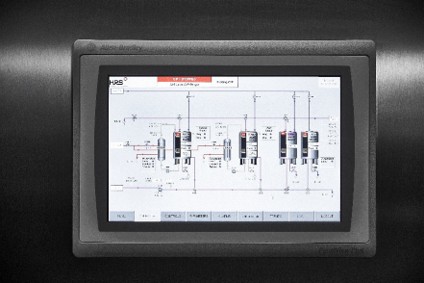
HRS systems are designed for effective and thorough Cleaning-in-Place (CIP) via integrated components and controls
Short runs and easy changeovers
Having flexible equipment which is capable of producing a range of different product types is a major benefit when trialling new products or producing short runs. Speed of changeover is a key consideration, as any downtime will increase overall production costs.
All HRS heat exchangers and food processing systems are designed for effective and thorough Cleaning-in-Place (CIP) via integrated components and controls. Prior to cleaning, as much product as possible should be removed to minimise wastage and energy use. This is often done by physical removal or using air or water under pressure, although in certain situations the HRS R Series can be run in reverse to remove and recover some product. Common elements found in most CIP systems include pre-rinsing, a high temperate caustic or chemical wash, and intermediate and final rinses. Washing processes use a combination of chemicals and agitation (such as turbulent flow in corrugated pipes) to remove dirt.
As a food and drink manufacturer, whether or not you are responding to the current fricy trend, it is vital to have reliable and efficient heat exchange equipment which is quick to adapt to changing consumer demands. Speak to HRS Heat Exchangers today to discuss our full range of corrugated tube and scraped surface heat exchangers for food and drink products.

About HRS Heat Exchangers
Located in the UK, HRS Heat Exchangers is part of the EIL Group (Exchanger Industries Limited) which operates at the forefront of thermal technology. HRS offers innovative heat transfer solutions worldwide across a diverse range of industries. With more than 40 years’ experience in the food and drink sector, specialising in the design and manufacture of an extensive range of turnkey systems and components, incorporating our corrugated tubular and scraped surface heat exchanger technology, HRS products are compliant with global design and industry standards. HRS has a network of offices throughout the world: Australia, Canada, UK, Spain, USA, Malaysia and India; with manufacturing plants in India, Spain and Canada.