
How modern technologies could transform robot combat
For many engineers of a certain generation, Robot Wars was more than just a television programme. It was an introduction to engineering, problem-solving and competitive robotics. Here, Dominika Stachowska, technical support engineer at automation and control specialist, Beckhoff UK, explains how the show could have benefitted from today’s condition monitoring technologies.
Long before robots became commonplace in warehouses and factories, audiences tuned in to watch homemade machines battle it out in an arena filled with hazards, sparks and the occasional dramatic mechanical failure.
Part of the show’s appeal came from the unpredictability. Robots would enter the arena looking battle-ready, only to suffer catastrophic damage minutes later, whether from competitors or the House Robots – Matilda, Sergeant Bash, Shunt or the dreaded Sir Killalot. Meanwhile, motors overheated, batteries failed, drive systems jammed and weapons stopped functioning without warning. For spectators, that uncertainty was entertaining. For the teams behind the robots, however, understanding why a machine failed was often far more difficult.
Today, advances in sensing, data acquisition and condition-monitoring technology mean that robot competitions could offer much deeper insight into what is happening beneath the armour.
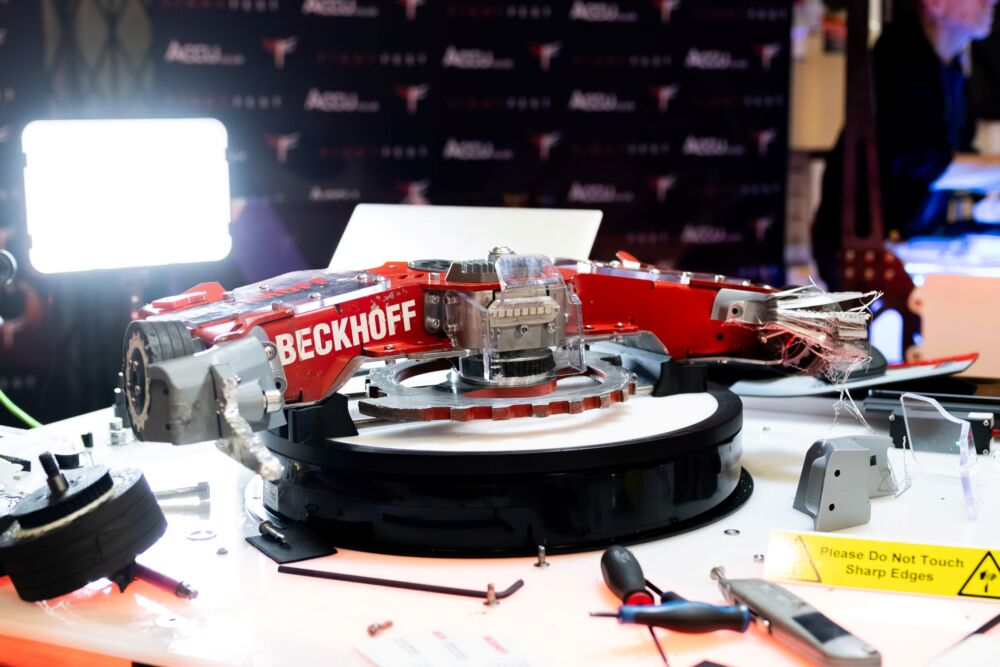
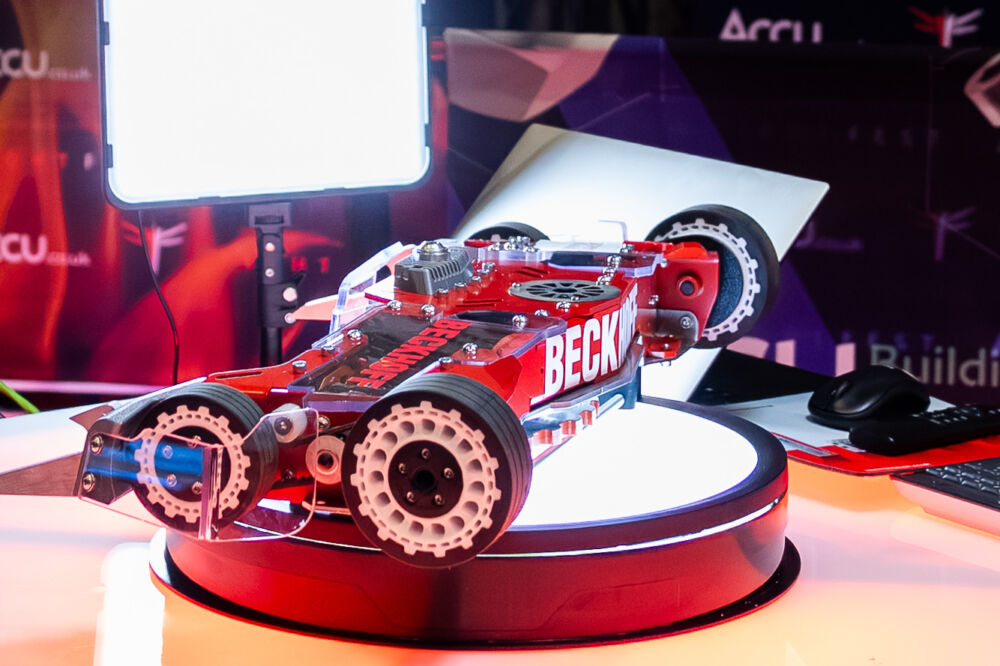
That was something I found myself thinking about while working on a condition monitoring project for FightFest, a robot combat competition held during Smart Manufacturing Week. The event brought together teams from across industry to compete in a series of robot battles, creating a modern equivalent of the Robot Wars experience that many engineers grew up watching.
As part of Beckhoff’s involvement in the event, I developed a system that monitored various aspects of robot performance before and after each fight. The platform combined temperature measurement, machine vision and audience interaction through a single human-machine interface (HMI), creating a live view of how robots changed throughout the competition.
Watching the robots compete made me wonder how different the original Robot Wars programme might have been if similar technologies had been available.
One obvious benefit would have been understanding the physical impact of each battle. During Fight Fest, robots often emerged from matches showing visible signs of damage. By capturing images before and after each fight, it became possible to compare their condition and identify changes that might otherwise have gone unnoticed. In a televised competition, this type of information could help explain why a robot’s performance deteriorated over successive rounds.
Temperature monitoring would also have provided valuable insight. Heat is often one of the first indicators that a system is operating under stress. Monitoring motor temperatures, drive systems or batteries could reveal which machines were being pushed hardest and how effectively different teams managed thermal performance throughout a tournament.
For competitors, that information could support maintenance decisions between rounds. For audiences, it adds another layer of storytelling.
Just imagine Craig Charles explaining that one robot entered the arena carrying significantly higher temperatures than its opponent or how a machine’s drive system was struggling to recover after several intense matches. Rather than relying solely on visible damage, viewers would gain a better understanding of the engineering challenges taking place behind the scenes.
Condition monitoring could also help answer some of the questions that often emerge after a fight: Why did a weapon suddenly fail? Why did a robot lose mobility despite appearing undamaged? Was a component gradually degrading over multiple matches, or did a single impact cause the failure?
In industrial environments, condition monitoring is frequently used to identify developing issues before they become critical. While robot combat is obviously a very different application, the principle remains the same: Collecting and analysing operational data can reveal patterns that are difficult to identify through visual inspection alone.
There is also an opportunity to make competitions more interactive. At Fight Fest, visitors could predict winners and vote on different aspects of the event while viewing data through the HMI. Combining live robot data with audience participation created a more engaging experience and encouraged visitors to look beyond the spectacle of the fights themselves.
Robot Wars captured imaginations because it combined engineering with entertainment. Today’s condition monitoring technologies would not replace that excitement, but they could add context to it. By revealing what is happening inside the machines, they could help audiences appreciate the engineering decisions, design trade-offs and technical challenges that ultimately determine success or failure in the arena.
The robots may still lose wheels, burn out motors and occasionally destroy themselves in spectacular fashion. The difference is that we would have a much clearer understanding of why. To learn more about how condition monitoring technologies are helping engineers make better decisions, visit Beckhoff’s website.