
LNG market trends took center stage at an international event organized by Vanzetti Engineering, culminating in the successful testing of the new ESK-IMO removable submerged cryogenic pump.
On 8 and 9 June, Vanzetti Engineering hosted an international event dedicated to LNG market trends, with a particular focus on the development of Small-Scale LNG Terminals, FSRUs and LNG bunkering. During the event, the company successfully tested its new ESK-IMO removable submerged cryogenic pump, a solution specifically designed to meet the technological challenges of these fast-growing market segments.
Held between Italy’s Langhe region and Vanzetti Engineering’s headquarters, the event brought together industrial partners, customers, national and international LNG associations and foundations—including Assogasliquidi, IGU and EPRINC—as well as leading maritime market analysts from Clarksons Research. The gathering provided an opportunity to discuss the future outlook for liquefied natural gas and the technologies driving the energy transition.
“From the growth of global LNG trade and Small-Scale LNG Terminals to the expansion of marine bunkering and the increasing adoption of bio-LNG, the message emerging from the event is very clear: the industry is undergoing profound transformation and requires technologies that are increasingly efficient, reliable and sustainability-oriented. In this context, solutions such as the ESK-IMO removable pump play a strategic role in supporting the next generation of LNG infrastructure worldwide,” commented Valeria Vanzetti Ghio, Sole Director of Vanzetti Engineering.
LNG in the Global Energy Landscape
Presentations and discussions throughout the event provided a comprehensive overview of today’s energy landscape, highlighting how the global gas market has undergone profound transformation in recent years to address growing energy security requirements, establishing LNG as the true “Fuel of the Transition.”
In particular, the shale gas revolution has reshaped global market dynamics, positioning the United States as the world’s leading producer of both natural gas and oil. Production efficiency has increased dramatically over the past decade, doubling LNG output while reducing the number of operating wells from 1,500 to just 100. U.S. LNG export capacity, currently around 150 million tonnes per year, could reach 250–270 million tonnes annually by 2031.
This development comes amid rapidly increasing global energy demand, where artificial intelligence has emerged as the primary driver of electricity consumption. The rapid expansion of data centres is creating unprecedented energy requirements, prompting technology companies to seek dedicated and reliable energy supplies, thereby opening new opportunities for natural gas.
Natural gas therefore plays a crucial role in ensuring energy security, supply continuity and supporting the transition towards lower-emission energy systems. Within this framework, the concept of Energy Transition is evolving into the broader concept of the Evolution of “Gas” with a capital G, where new energy sources—including biomethane, synthetic methane and hydrogen—will progressively complement existing ones to meet growing global energy demand while advancing decarbonisation.
The importance of this trend is confirmed by global LNG trade, which has increased from approximately 240 million tonnes in 2015 to more than 440 million tonnes in 2024, highlighting the need for long-term planning to mitigate market volatility.
The Strategic Role of Small-Scale Terminals and FSRUs
The growing availability of LNG is expected to support numerous applications, particularly small-scale LNG terminals, which are becoming increasingly strategic in making liquefied natural gas accessible to ports, industries and regions not served by large-scale infrastructure.
During the event, speakers highlighted the continued expansion of small-scale terminals worldwide, driven by the need for more flexible and resilient energy systems. According to data presented by the International Gas Union, around 40% of the liquefaction plants currently under construction worldwide fall into the small-scale category, with capacities of up to 3 million tonnes per year.
The growth of small-scale terminals is being driven not only by lower capital investment requirements but also by significantly shorter permitting and construction times compared with conventional terminals. The strongest growth prospects are expected in emerging markets such as India, Indonesia and several African countries, where urbanisation and population growth are rapidly increasing energy demand.
At the same time, Floating Storage and Regasification Units (FSRUs) are assuming an increasingly strategic role in enhancing flexibility and energy security, particularly in Europe, where they have contributed to diversifying gas supplies following the reduction in imports from Russia. Among the most innovative technological topics discussed during the event was the growing interest in recovering the so-called “cold energy” generated during LNG regasification. This energy can be utilised in a wide range of industrial applications, including dry ice production, air separation and cooling data centres located near LNG terminals.
The Growth of LNG Bunkering
Another key topic was LNG bunkering, widely regarded as one of the main drivers of LNG demand growth over the coming decade. Approximately 60% of all new orders for vessels powered by alternative fuels involve LNG solutions, confirming the central role of LNG in the decarbonisation of maritime transport, supported by evolving international regulations and emission reduction targets established by the IMO (International Maritime Organization) and European policies.
The analyses presented confirmed the continued expansion of LNG as a marine fuel. Today, more than 1,500 vessels are already LNG-fuel-capable, with the global fleet expected to exceed 3,500 vessels by 2030, while the dedicated LNG bunkering fleet is projected to reach approximately 80 vessels by 2028.
The adoption of new LNG bunkering guidelines and the completion of dedicated infrastructure are expected to further accelerate the use of LNG in maritime transport. Nevertheless, uncertainties remain, including future global carbon pricing policies and geopolitical tensions affecting strategic areas such as the Strait of Hormuz, both of which have the potential to influence shipping routes and transportation costs.
Heavy-Duty Transport and Bio-LNG
In Italy, the market is benefiting from the expansion of coastal infrastructure and LNG storage facilities, with the heavy-duty transport sector representing the primary driver for the deployment of Small-Scale LNG Terminals. This segment currently accounts for around 70% of sector consumption through a fleet of approximately 5,300 LNG-powered vehicles supported by 177 refuelling stations, making it the core market for this application.
The real game changer for the sector’s sustainability is bio-LNG, a key solution for decarbonising freight transport while maintaining full compatibility with existing infrastructure. However, the success of this transition depends on a more harmonised European regulatory framework. In this respect, the German model represents an important benchmark, having already introduced targeted incentives that are accelerating the adoption of bio-LNG-powered vehicles.
ESK-IMO: Vanzetti Engineering’s Technological Response
The expansion of small-scale LNG terminals, FSRUs and bunkering activities requires technologies capable of ensuring operational continuity, high efficiency and simplified maintenance.
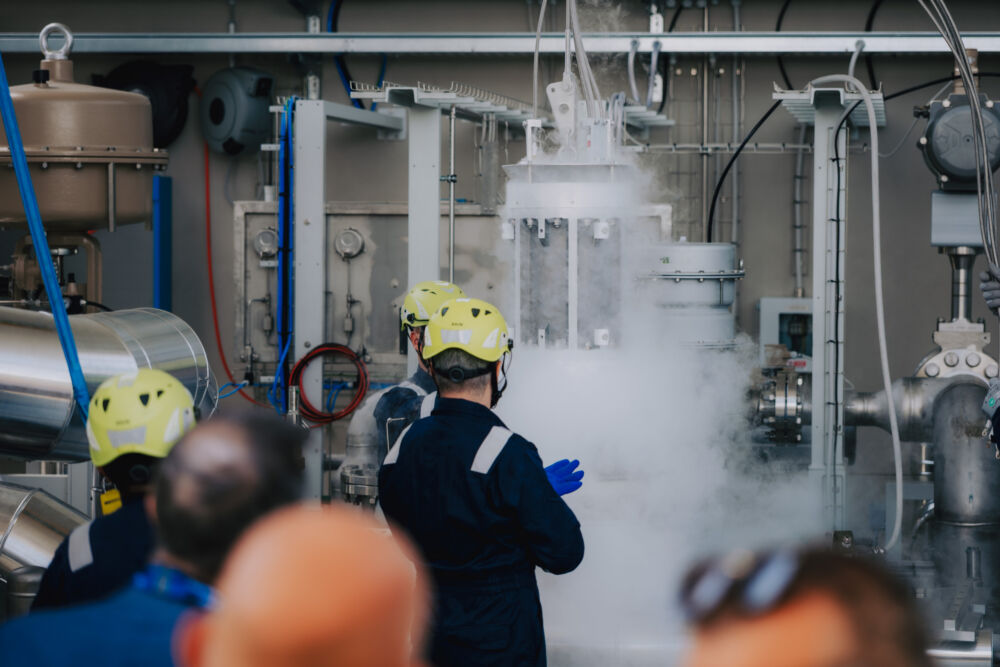
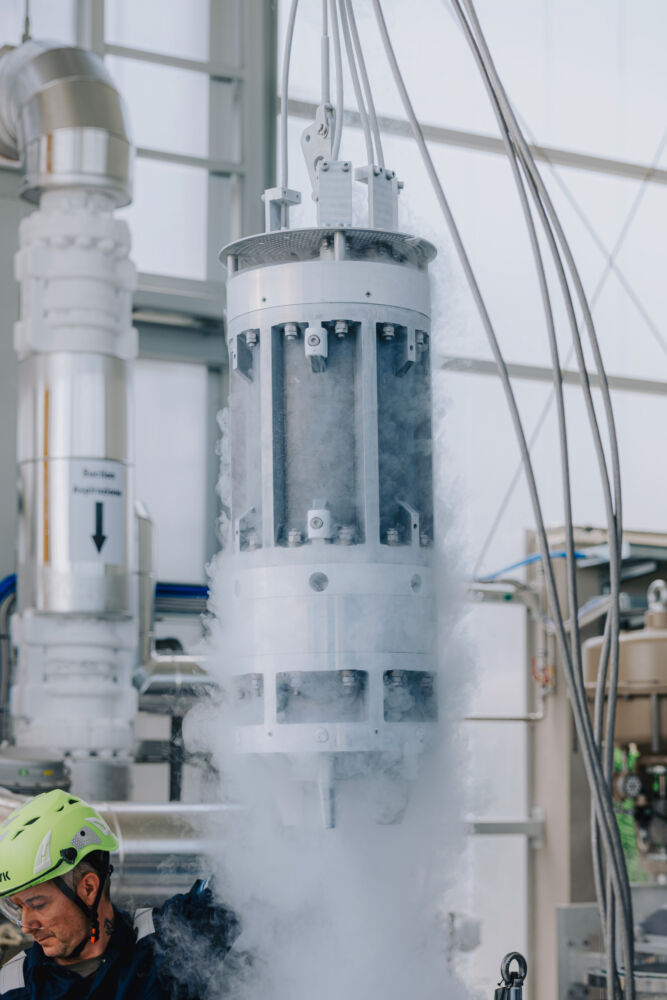
To address these requirements, Vanzetti Engineering has developed the ESK-IMO series of removable submerged pumps. On 9 June, the company welcomed event participants to its Cavallerleone headquarters to witness a live demonstration of the new product.
The ESK-IMO series builds on the company’s extensive experience with the ARTIKA submerged cryogenic pump, with more than 1,500 units installed in marine applications worldwide, inheriting the reliability and proven performance of a well-established product.
The ESK-IMO pump has been designed to meet the operational requirements of small-scale LNG terminals and for marine applications as a Cargo/Stripping Pump, enabling tank emptying in the event of malfunction or maintenance of the main cargo pumps.
The range includes the ESK-IMO 230, ESK-IMO 300 and ESK-IMO 400, offering flow rates of up to 85, 300 and 550 m³/h, respectively, covering the requirements of the main emerging LNG applications.
A key distinguishing feature of the ESK-IMO series is the integration of an advanced validation process based on a dedicated test bench specifically designed and developed for this product range, ensuring consistent, certified performance.
Vanzetti Engineering
Established in 1984, Vanzetti Engineering S.p.A. is an Italian company active in the design and manufacture of cryogenic equipment for Liquefied Natural Gas (LNG) and air gases. With its range of products, Vanzetti Engineering is able to cover downstream applications in the LNG chain.
Opened in 2015, its new 12,000 m2 plant houses its cryogenic pump and skid production processing departments, and has allowed for a considerable increase in the company’s production capacity.
Thanks to the skills acquired over the years, Vanzetti Engineering has developed a complete range of cryogenic pumps and components for its main business sectors: Marine, Automotive and Industrial. Vanzetti Engineering’s solutions are used in many types of applications, including: fuel systems for marine engines and ship refuelling; LNG/L-CNG refuelling stations; transfer systems from road trailers and stationary storage tanks; satellite stations with power supply and support to the gas pipeline network, including power generation plants; medium and high pressure filling of air gas cylinders (nitrogen, argon, oxygen) for industrial, food and medical applications.