~ 30 years of flexible, software-driven automation with TwinCAT ~
1996 was certainly a year of innovation. Dolly the sheep became the first cloned mammal, the DVD was being introduced in Japan and the USB 1.0 specification was being released. It was a year defined by transition and, against this backdrop, Beckhoff introduced TwinCAT – a software platform that quietly disrupted the status quo of industrial automation. Here, Beth Ragdale, product manager at Beckhoff UK, explores the history of TwinCAT and what it has meant for industrial automation in the years since its release.
Thirty years ago, many industrial automation systems were largely defined by proprietary hardware and closed architectures. While programmable logic controllers (PLCs) were reliable, they offered limited flexibility and scalability. As manufacturing systems became more complex, operators, engineers and manufacturers looked for ways to harness the rapidly advancing power of PC technology.
This was a challenge Beckhoff set out to address. By enabling real-time automation control on conventional PC hardware, TwinCAT introduced a new model for industrial systems – one where software, rather than dedicated hardware, defined the capabilities of control environments.
Why TwinCAT was created
When Beckhoff introduced TwinCAT in 1996, the idea of running industrial control software on a standard PC was far from the norm. Any automation platforms used were often tied to proprietary controllers, making upgrades and integration with other technologies challenging.
Things were siloed and TwinCAT challenged this model by transforming a PC into a real-time controller capable of executing PLC logic, motion control and other automation tasks. This approach embodied Beckhoff’s PC-based control philosophy: applying PC technology to create flexible, scalable automation systems.
For manufacturers and machine builders, this philosophy paid dividends. By separating control software from vendor-specific hardware, engineers gained greater freedom in how their systems were designed, expanded and maintained. It also allowed automation to benefit from rapid advances in PC performance, ensuring systems could evolve along with advancements in computing.
Towards an integrated automation platform
Over the past three decades, TwinCAT has evolved far beyond its origins as a software-only PLC, expanding to support a far wider range of automation capabilities.
A key milestone was TwinCAT 3, which integrated the engineering environment into Microsoft Visual Studio. This enabled engineers to combine traditional PLC programming with languages such as C++ in the same development environment. By bridging IT and operational technology (OT), TwinCAT made collaboration on complex industrial systems far easier.
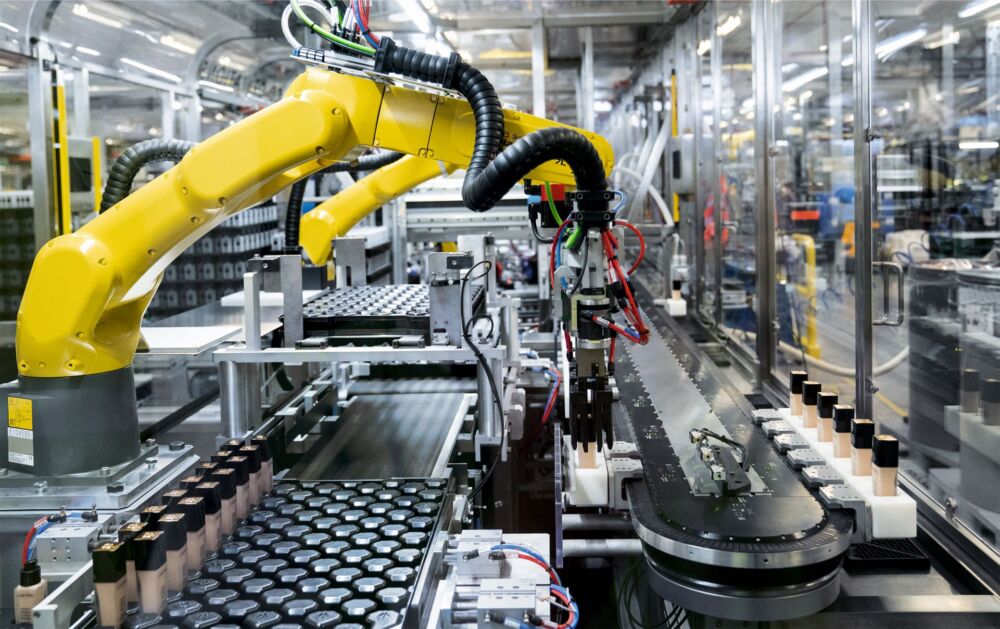
Today, TwinCAT is a complete automation platform that supports motion control, robotics, machine vision and more. One of its core features is its modular architecture, which allows users to add capabilities as required, meaning they can tailor their systems to the specific needs of machines and production lines.
The importance of this flexibility can’t be overstated. Manufacturing demand varies with anything from external market forces to seasonal fluctuations and ever-changing customer preferences, which requires automation systems to scale alongside.
Looking ahead
It’s safe to say that the demand placed on automation platforms has intensified over the last three decades, and that technology has had to evolve with this. Such demand will only increase in the years to come, with AI, advanced analytics and data-driven decision-making already playing a far greater role in industrial facilities and production processes.
As more engineers, manufacturers and equipment operators explore these technologies, their automation architecture will be put to the test. It’s in these settings that platforms such as TwinCAT come into their own, as they provide real-time control with the scalability of PC-based computing. Furthermore, the platforms enable facilities to integrate emerging technologies while protecting their existing investments, without starting from scratch.
Nearly 30 years after its introduction, TwinCAT is rooted in the same philosophy: open, flexible automation powered by widely available computing technology. That same openness continues to help manufacturers future-proof their facilities as the demands of digitalisation and intelligent automation continue to grow. Much like how Dolly reshaped biotechnology and USB defined universal connectivity, TwinCAT’s early vision of open, PC-based control has helped lay the foundations for the next generation of intelligent industrial automation.
For more information on TwinCAT 3, including its functions, recent software updates and licensing, visit the Beckhoff website https://www.beckhoff.com/en-en/products/automation/twincat/.